







Lasersec Technologies

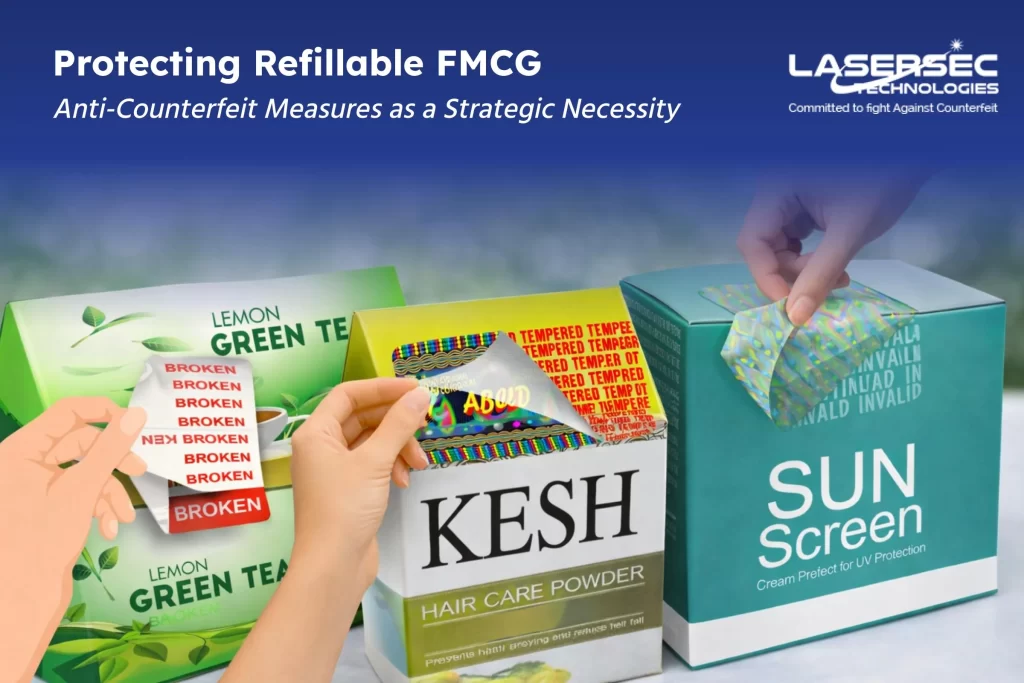
Anti-counterfeit packaging for refillable FMCG products

Sustainability is becoming a major priority for FMCG brands worldwide.

Many companies are redesigning packaging systems to reduce plastic waste, minimize environmental impact, and encourage circular consumption models.

One of the most widely adopted approaches is refillable packaging.

Consumers purchase a durable container once and then refill it with product pouches, sachets, or refill packs. This model significantly reduces packaging waste and supports long-term sustainability goals.

However, while refillable packaging improves environmental performance, it also introduces new security challenges.

Refill packs and reusable containers can become targets for counterfeit products if authentication mechanisms are not integrated into the packaging system.

For FMCG brands focused on sustainability innovation, ensuring both environmental responsibility and product authenticity is becoming increasingly important.

The Rise of Refillable Packaging in the FMCG Industry

Refillable packaging systems are becoming increasingly common across FMCG categories such as:

  • Personal care products
  • Household cleaning products
  • Liquid detergents
  • Beauty and skincare products
  • Food and beverage concentrates

In these systems, consumers typically purchase a primary container that is designed for repeated use.

Refill packs allow the consumer to replenish the product without discarding the main container.

This model offers several sustainability benefits:

  • Reduced plastic consumption
  • Lower packaging waste
  • Reduced transportation impact due to lighter refill packs
  • Improved lifecycle efficiency for packaging materials
While these advantages are significant, refillable systems also create new vulnerabilities for product authenticity.

The Counterfeit Risk in Refillable FMCG Products

In refill-based systems, the original container often remains in use for a long period of time.

Consumers rely on refill packs to maintain product quality and performance.

However, counterfeiters may attempt to exploit this system by introducing fake refill packs or unauthorized refilling practices.

Some common risks include:

  • Counterfeit refill pouches imitating branded refill packs
  • Unauthorized refill stations offering diluted or fake products
  • Reused containers filled with non-genuine formulations
  • Repackaged counterfeit products sold as genuine refills

Because consumers already possess the original container, they may assume that any refill product associated with that brand is authentic.

Without authentication features, distinguishing genuine refills from counterfeit ones becomes extremely difficult.

Why Traditional Packaging Security May Not Work for Refill Systems

Traditional anti-counterfeit strategies often focus on protecting the primary product packaging.

However, refill systems change the structure of product distribution.

Instead of purchasing a completely new packaged product each time, consumers rely on secondary refill formats.

These refill packs are often:

  • Smaller
  • Flexible pouches or sachets
  • Lightweight packaging formats

Because refill packs are designed to reduce material usage, they may contain fewer physical security elements.

This creates opportunities for counterfeiters to replicate packaging designs more easily.

For FMCG brands investing in sustainability-driven packaging systems, security must evolve alongside sustainability initiatives.

The Authentication Challenges of Reusable Containers

Reusable containers present another layer of complexity for product authentication.

Since the primary container may remain in use for months or even years, the container itself does not necessarily verify the authenticity of the product inside.

A consumer may refill the container multiple times, but there is no guarantee that the refill used is genuine.

Without proper authentication mechanisms, several issues can arise:

  • Consumers unknowingly using counterfeit refills
  • Diluted or substandard products affecting performance
  • Negative brand experiences caused by fake formulations
  • Difficulty tracing product origin
In such scenarios, the brand may still be blamed even though the counterfeit refill was not produced by the manufacturer.

Integrating Authentication into Refill Packaging

To address these risks, FMCG brands are increasingly integrating authentication technologies directly into refill packaging systems.

These technologies help verify product authenticity while maintaining the sustainability advantages of refill models.

Common authentication solutions include:

These features allow consumers, retailers, and manufacturers to confirm that the refill product originates from an authorized source.

How QR-Based Authentication Supports Refillable Packaging

QR code authentication is particularly well suited for refill packaging because it requires minimal packaging material while enabling powerful verification capabilities.

Each refill pack can carry a unique scannable QR code linked to a secure authentication system.
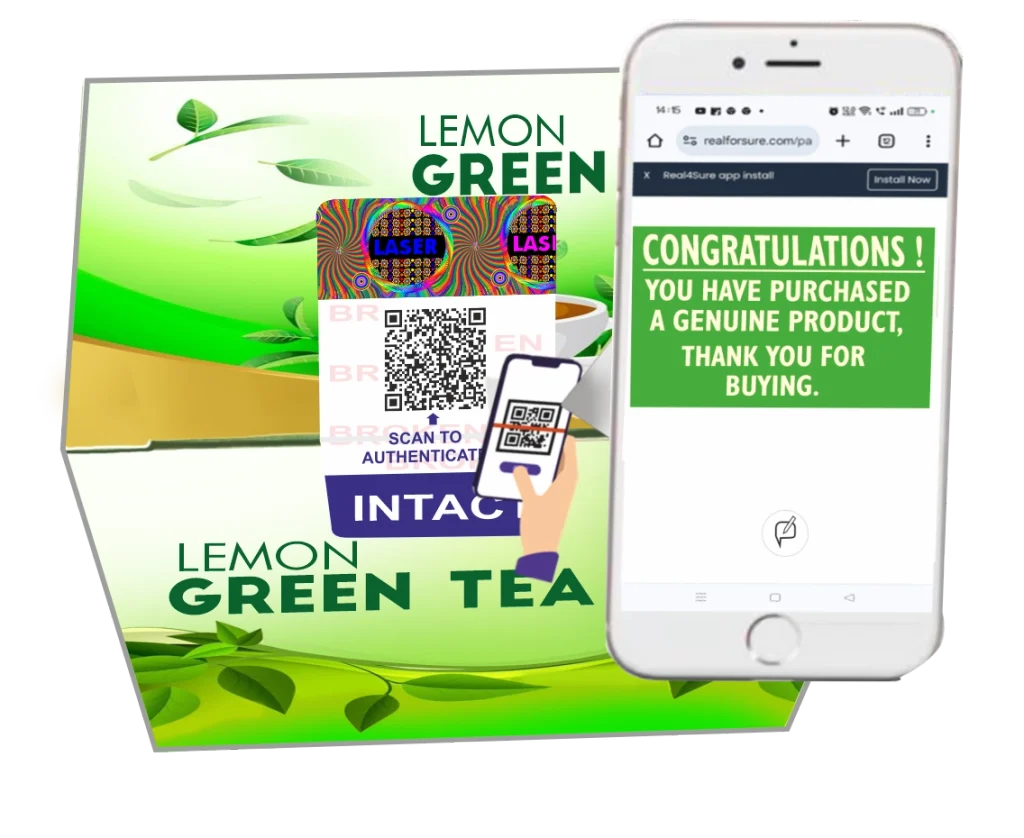
When scanned, the system can verify:

  • Whether the refill product is genuine
  • Manufacturing origin and batch details
  • Product authenticity status
  • Brand verification information

This creates a simple verification process that consumers can perform using their smartphones.

If duplicate scans or suspicious activity occurs, the system can flag potential counterfeit distribution.

Supporting Transparency in Sustainable FMCG Supply Chains

Consumers who choose refillable products are often highly conscious about sustainability and brand ethics.

These consumers value transparency regarding product origin, formulation quality, and environmental impact.

Authentication technologies allow brands to provide this transparency through digital engagement.

When consumers scan refill packaging, brands can share information such as:

  • Product authenticity confirmation
  • Sustainability commitments
  • Responsible sourcing practices
  • Product usage guidance
This interaction strengthens consumer trust while reinforcing the brand’s sustainability messaging.

Why Sustainability and Security Must Work Together

Sustainability innovations should not compromise product security.

If refill systems are vulnerable to counterfeit infiltration, the consequences can include:

  • Consumer safety concerns
  • Product performance failures
  • Damage to brand credibility
  • Loss of consumer trust in refill systems

Therefore, packaging innovators and sustainability leaders must design refillable packaging systems that balance environmental responsibility with authentication security.

Integrating anti-counterfeit technologies ensures that refillable models remain safe, reliable, and trustworthy.

How Lasersec Technologies Supports Secure Refillable Packaging

At Lasersec Technologies, we help FMCG brands integrate authentication and anti-counterfeit protection into modern packaging systems.

Our solutions combine secure holographic labels, QR-based authentication, tamper-evident packaging features, and Track & Trace systems to protect products across evolving packaging formats.

These technologies help FMCG brands:

  • Prevent counterfeit refill products
  • Protect reusable container ecosystems
  • Enable consumer-level product authentication
  • Strengthen supply chain visibility
  • Support sustainable packaging strategies without compromising security

By integrating smart authentication technologies into refill packaging, brands can maintain both environmental responsibility and product integrity.
Share :

Frequently Asked Questions

Refillable packaging systems can be vulnerable to fake refill packs, unauthorized refilling, and reused containers filled with counterfeit products. Anti-counterfeit technologies help brands verify product authenticity, protect consumers, and maintain trust in sustainable packaging initiatives. Learn how tamper-proof seals in FMCG build consumer trust and prevent refilling or product substitution and explore our full range of FMCG Industry Anti-Counterfeit Solutions for refill packaging security.

Unique QR codes allow consumers, retailers, and manufacturers to verify whether a refill pack is genuine using a smartphone. The technology can also provide access to product information, batch details, and authentication records while helping brands detect suspicious or duplicate scans. Explore how QR-based authentication strengthens brand protection and discover our Anti-Counterfeit Labels with QR Code designed specifically to strengthen refill pack verification across FMCG supply chains.

Yes. Sustainability and security are complementary when designed together. Refillable packaging can incorporate authentication technologies such as tamper-evident seals, security holograms, serialized identifiers, and Track & Trace systems without undermining environmental goals. See how tamper-evident packaging and Track & Trace work together to deliver layered protection, and learn how building instant consumer trust with QR codes helps FMCG brands reduce waste while protecting against counterfeit products.

For FMCG brands, anti-counterfeit measures can protect brand reputation, improve consumer confidence, reduce the circulation of fake refill products, and support long-term sustainability initiatives. Discover how anti-counterfeiting solutions are critical for emerging FMCG markets and explore how our Tamper-Proof Hologram Stickers combined with QR Code Authentication and Track & Trace Technology create a layered approach to safeguarding refill ecosystems.

An effective refill packaging solution should combine authentication, tamper evidence, and supply chain visibility while remaining compatible with sustainability objectives. Features such as unique QR codes, holographic security elements, serialized identifiers, and Track & Trace capabilities help ensure refill products remain genuine from production to purchase. Explore our FMCG Industry Anti-Counterfeit Solutions and Anti-Counterfeit Labels with QR Code, and learn how combating food adulteration with anti-counterfeit solutions helps build a secure and sustainable packaging strategy.

Frequently Asked Questions

Refillable packaging systems can be vulnerable to fake refill packs, unauthorized refilling, and reused containers filled with counterfeit products. Anti-counterfeit technologies help brands verify product authenticity, protect consumers, and maintain trust in sustainable packaging initiatives. Learn how tamper-proof seals in FMCG build consumer trust and prevent refilling or product substitution and explore our full range of FMCG Industry Anti-Counterfeit Solutions for refill packaging security.

Unique QR codes allow consumers, retailers, and manufacturers to verify whether a refill pack is genuine using a smartphone. The technology can also provide access to product information, batch details, and authentication records while helping brands detect suspicious or duplicate scans. Explore how QR-based authentication strengthens brand protection and discover our Anti-Counterfeit Labels with QR Code designed specifically to strengthen refill pack verification across FMCG supply chains.

Yes. Sustainability and security are complementary when designed together. Refillable packaging can incorporate authentication technologies such as tamper-evident seals, security holograms, serialized identifiers, and Track & Trace systems without undermining environmental goals. See how tamper-evident packaging and Track & Trace work together to deliver layered protection, and learn how building instant consumer trust with QR codes helps FMCG brands reduce waste while protecting against counterfeit products.

For FMCG brands, anti-counterfeit measures can protect brand reputation, improve consumer confidence, reduce the circulation of fake refill products, and support long-term sustainability initiatives. Discover how anti-counterfeiting solutions are critical for emerging FMCG markets and explore how our Tamper-Proof Hologram Stickers combined with QR Code Authentication and Track & Trace Technology create a layered approach to safeguarding refill ecosystems.

An effective refill packaging solution should combine authentication, tamper evidence, and supply chain visibility while remaining compatible with sustainability objectives. Features such as unique QR codes, holographic security elements, serialized identifiers, and Track & Trace capabilities help ensure refill products remain genuine from production to purchase. Explore our FMCG Industry Anti-Counterfeit Solutions and Anti-Counterfeit Labels with QR Code, and learn how combating food adulteration with anti-counterfeit solutions helps build a secure and sustainable packaging strategy.

Related Blogs

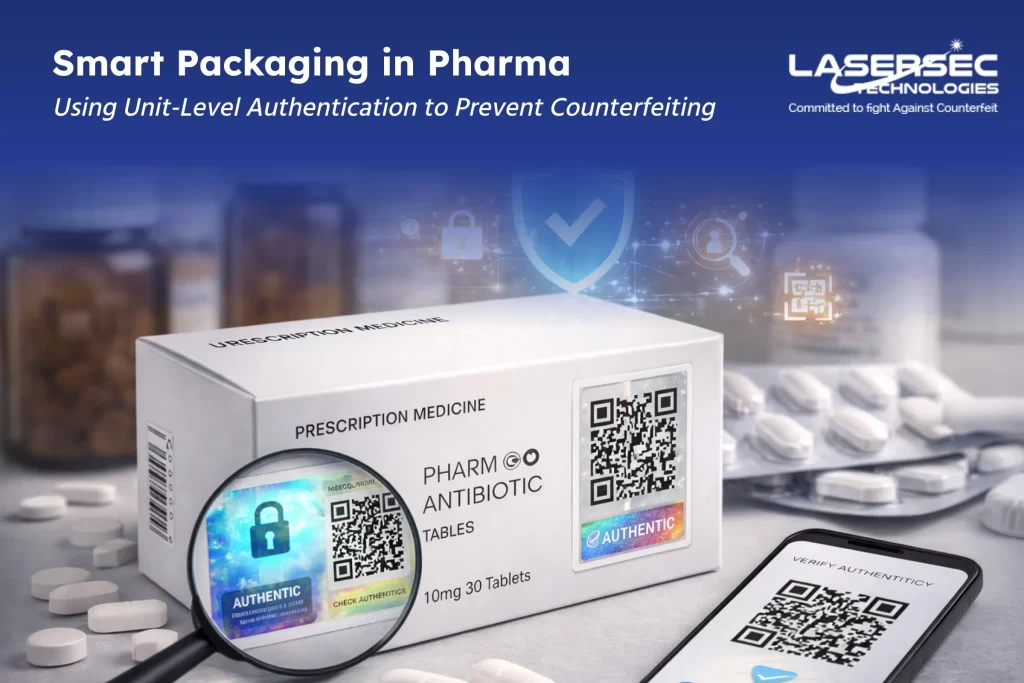
Pharmaceutical packaging security has become a critical concern for drug manufacturers worldwide. Unit-level authentication is now the smartest way to protect every package across the supply chain.

At each stage, verifying the authenticity of the medicine becomes essential.

In many markets, counterfeit drugs and unauthorized repackaging continue to challenge pharmaceutical supply chains. Packaging may appear genuine, yet without reliable authentication systems, it can be difficult to confirm whether the medicine is authentic.

This is why pharmaceutical companies are increasingly implementing unit-level authentication systems.

Unit-level authentication assigns a unique identity to every individual product unit, allowing manufacturers, regulators, and pharmacies to verify authenticity instantly through secure authentication technologies such as QR code authentication and Track & Trace systems.

By enabling verification at the smallest packaging level, pharmaceutical companies can significantly reduce the risk of counterfeit medicines entering the market.

The Growing Risks of Counterfeit and Repacked Medicines

Pharmaceutical products move through complex supply chains before reaching patients. These supply chains often involve multiple intermediaries such as distributors, wholesalers, and retailers.

This complexity creates opportunities for unauthorized activities, including counterfeit drug circulation and repackaging of genuine medicines.

Some common risks include:

  • Counterfeit medicines replicating genuine packaging using security hologram stickers
  • Unauthorized repackaging of original medicines
  • Reuse of genuine packaging for fake products
  • Diversion of products into unintended markets
  • Difficulty verifying authenticity at pharmacy level

These activities not only affect pharmaceutical companies but also create serious risks for patient safety.

Consequences can include:

  • Reduced trust in pharmaceutical brands
  • Regulatory compliance issues
  • Distribution channel conflicts
  • Potential health risks for patients

Without reliable authentication systems, detecting these issues early becomes extremely difficult.

What Is Unit-Level Authentication in Pharmaceutical Packaging

Unit-level authentication means assigning a unique, traceable identity to every individual medicine package.

Instead of identifying products only by batch numbers or carton-level codes, each unit receives its own authentication marker.

This is typically implemented using technologies such as:

Each identifier is connected to secure manufacturing and distribution data.

When the code is scanned, the system can instantly verify:

  • Whether the product is genuine
  • The manufacturing origin
  • Batch and production information
  • Whether the code has been duplicated

This enables reliable product verification throughout the supply chain.

How Unit-Level Authentication Prevents Fake Repackaging

One of the most common challenges in pharmaceutical markets is fake repackaging.

In this scenario, counterfeiters reuse genuine packaging materials or create look-alike packaging to insert counterfeit medicines.

Without authentication, these fake products may appear legitimate.

Unit-level authentication prevents this by ensuring that each product unit has a unique identity supported by technologies like QR code holograms.

If a counterfeiter attempts to copy or reuse a code, the authentication system can detect:

  • Duplicate code scans
  • Invalid product records
  • Suspicious verification locations

This allows manufacturers and regulators to quickly identify counterfeit activity and take corrective action. By making every package individually verifiable, unit-level authentication significantly reduces the risk of fake repackaging.

Preventing Product Diversion with Unit-Level Verification

Product diversion occurs when genuine medicines are redirected from their intended distribution markets into unauthorized regions.

This can disrupt pricing structures, violate distribution agreements, and create regulatory complications.

Unit-level authentication helps detect diversion by linking each product unit to specific manufacturing and distribution data through systems like Track & Trace technology.

When the product is scanned, the system can verify:

  • The intended market for the product
  • Whether it appears in an unexpected location
  • Whether the product has already been verified elsewhere

If the product is detected outside its authorized distribution channel, the system can immediately flag the activity. This visibility allows pharmaceutical companies to investigate unauthorized distribution and maintain better control over global supply chains.

Strengthening Pharmaceutical Compliance and Traceability

Many regulatory frameworks now require pharmaceutical manufacturers to implement serialization and traceability systems. Authorities expect companies to demonstrate the ability to verify product authenticity and track medicines across the supply chain.

Unit-level authentication supports these regulatory goals by enabling:

  • Individual product serialization
  • End-to-end supply chain traceability
  • Authentication verification at distribution points
  • Faster investigation of suspicious products

These capabilities help regulators confirm product legitimacy during inspections and market surveillance.For pharmaceutical companies operating in global markets, unit-level authentication also strengthens compliance with evolving regulatory standards using solutions such as Track & Trace systems.

Improving Patient Trust Through Product Verification

Patients rely on medicines to protect their health, which makes trust essential in the pharmaceutical industry. However, patients often cannot visually distinguish between genuine and counterfeit medicines if packaging looks similar.

Unit-level authentication enables pharmacies and even patients to verify medicines quickly using smartphone-based authentication tools. By scanning a secure QR code or authentication marker such as QR code authentication labels, users can confirm whether the product is genuine.

This level of transparency helps:

  • Improve patient confidence in medicines
  • Reduce circulation of counterfeit drugs
  • Strengthen trust in pharmaceutical brands
  • Support safer healthcare outcomes

How We Support Unit-Level Authentication in Pharmaceutical Packaging

At Lasersec Technologies, we provide advanced anti-counterfeit packaging solutions designed to help pharmaceutical manufacturers implement reliable unit-level authentication systems.

Our solutions integrate secure packaging technologies with digital authentication platforms using:

By embedding these technologies directly into pharmaceutical packaging, we help manufacturers create secure authentication systems that protect medicines across the entire supply chain. To explore more, visit our Pharma Solutions.

Why Unit-Level Authentication Is Essential for Modern Pharmaceutical Packaging

Pharmaceutical supply chains are becoming increasingly complex, and the risks associated with counterfeit medicines continue to grow. Unit-level authentication provides a powerful solution by enabling every medicine package to be individually verified.

This approach helps pharmaceutical companies detect counterfeit activity, prevent product diversion, and maintain greater visibility across their supply chains. Most importantly, it helps ensure that genuine medicines reach pharmacies and patients safely. In today’s pharmaceutical industry, unit-level authentication is no longer optional.  It is a critical foundation for protecting product integrity, regulatory compliance, and patient trust.

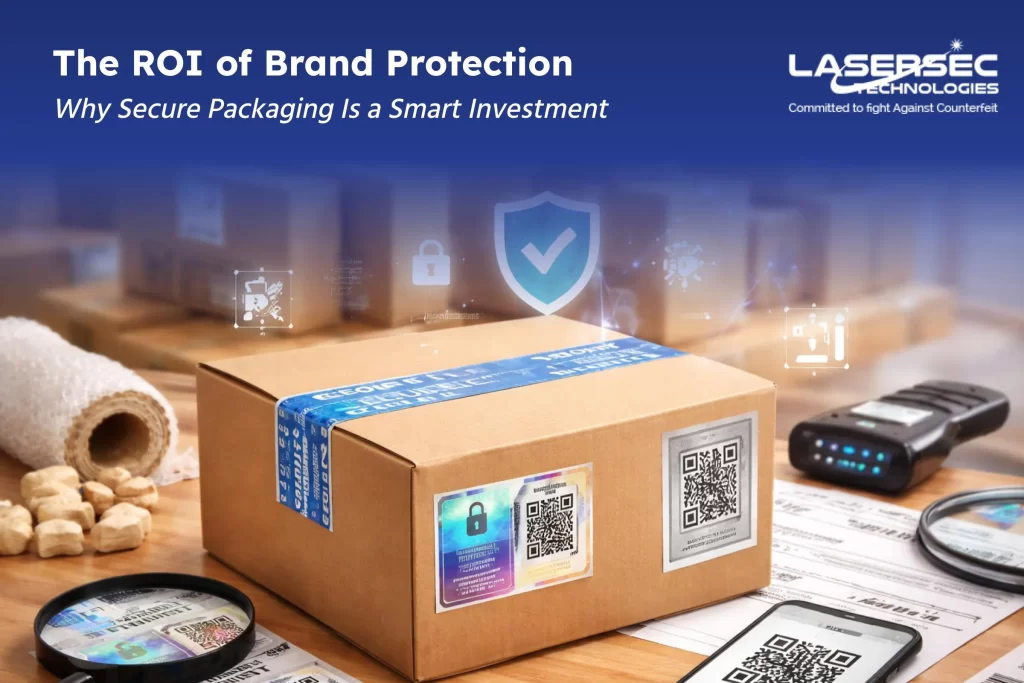
ROI of secure packaging showing cost savings and brand protection

For many manufacturers, brand protection is often viewed as a cost rather than an investment.

Security labels, holographic features, and authentication technologies may appear as additional expenses in packaging budgets. When production volumes are high and margins are tightly managed, companies sometimes question whether these protections are truly necessary.

However, the real cost of counterfeiting often becomes visible only after damage has already occurred.

Counterfeit products do not just affect short-term revenue. They can disrupt distributor networks, damage brand reputation, create regulatory complications, and erode customer trust. In some industries, counterfeit products can even pose serious safety risks.

This is why forward-thinking manufacturers increasingly treat secure packaging and brand protection technologies as strategic investments rather than operational costs.

When implemented correctly, secure packaging delivers measurable returns by preventing revenue loss, protecting brand value, and strengthening supply chain control using solutions like security hologram stickers and Track & Trace systems.

The Hidden Financial Impact of Counterfeit Products

Counterfeiting has become a global challenge across industries including pharmaceuticals, electronics, FMCG, automotive spare parts, and apparel.

While counterfeit products may look similar to genuine ones, their impact on legitimate manufacturers can be significant.

Common consequences include:

  • Direct loss of product sales
  • Price erosion due to counterfeit competition
  • Distributor conflicts in affected markets
  • Increased warranty claims or complaints
  • Customer distrust toward the brand

In many cases, counterfeit products also damage the brand’s long-term reputation.

Consumers who unknowingly purchase counterfeit products often associate poor quality or safety concerns with the original brand. Even if the manufacturer is not responsible, the perception of the brand can suffer.

These indirect costs are often far greater than the initial revenue losses caused by counterfeit sales.

Why Counterfeiting Damages More Than Just Revenue

When counterfeit products enter the market, the impact extends beyond lost sales.

Counterfeiting can create several operational and strategic risks for manufacturers:

  • Regulatory complications if counterfeit products violate safety standards
  • Distributor relationship conflicts when unauthorized products appear in protected markets
  • Loss of market control due to parallel trade or diversion
  • Damage to brand credibility among customers and retailers
  • Increased investigation and enforcement costs

In industries such as pharmaceuticals or food products, counterfeit goods can also pose serious safety risks to consumers.

When customers lose confidence in a brand’s authenticity, rebuilding that trust can take years.

For this reason, the financial impact of counterfeiting should be evaluated not only in terms of lost units, but also in terms of long-term brand damage.

How Secure Packaging Protects Product Authenticity

Secure packaging introduces protective features that make it significantly more difficult for counterfeiters to replicate genuine products.

Instead of relying solely on standard labels or printed information, manufacturers can integrate anti-counterfeit packaging technologies directly into the product packaging.

These technologies may include:

Each of these elements strengthens the ability to verify whether a product is genuine.

When combined with authentication systems, packaging can provide unit-level product verification, allowing distributors, retailers, or consumers to confirm authenticity instantly.

The Business Value of Authentication and Verification Systems

Secure packaging becomes even more powerful when integrated with digital authentication platforms.

Authentication systems allow manufacturers to verify products through digital scanning technologies such as QR codes or serialization platforms.

This enables companies to:

  • Confirm whether a product is genuine
  • Detect duplicate or suspicious authentication attempts
  • Identify unauthorized product distribution
  • Track product movement across markets
  • Monitor potential counterfeiting activity
By transforming packaging into a verification tool, manufacturers gain better visibility across their supply chains using systems like Track & Trace technology.

This helps companies move from reacting to counterfeit incidents toward proactively preventing them.

Measuring the Return on Investment of Brand Protection

The return on investment (ROI) of brand protection comes from both prevented losses and long-term brand value protection.

Secure packaging investments help manufacturers recover value in several ways:

Revenue Protection

  • Prevents counterfeit products from capturing legitimate market share
  • Protects pricing integrity in key markets
  • Maintains revenue across authorized distribution networks

Brand Reputation Protection

  • Preserves customer trust in product authenticity
  • Prevents negative experiences caused by counterfeit products
  • Maintains brand credibility across markets

Operational Risk Reduction

  • Reduces supply chain disputes caused by diversion or parallel trade
  • Improves product traceability
  • Supports regulatory verification and inspections
When these factors are considered together, the financial value of brand protection often exceeds the cost of implementing secure packaging technologies.

Strengthening Supply Chain Control Through Secure Packaging

Manufacturers often lose visibility over products once they leave the production facility.

Secure packaging combined with authentication systems helps restore that visibility.

By enabling verification at different points in the supply chain through solutions like QR code authentication and Track & Trace systems, companies can:

  • Detect suspicious product movement
  • Identify unauthorized distributors
  • Monitor market-level product activity
  • Investigate potential counterfeit hotspots
This level of transparency strengthens supply chain control and allows manufacturers to respond quickly when irregularities appear.

How We Support Brand Protection Through Secure Packaging

At Lasersec Technologies, we provide advanced anti-counterfeit packaging solutions designed to help manufacturers protect their brands and products across global markets.

Our solutions integrate security features directly into packaging using technologies such as:

These technologies help manufacturers create reliable authentication systems that protect products throughout the supply chain. To explore industry-specific applications, visit ourIndustry Solutions Gallery.

Why Brand Protection Is a Strategic Business Investment

Counterfeiting continues to grow across industries, creating serious risks for manufacturers and brand owners.

Treating brand protection as an optional expense can expose companies to significant financial and reputational damage.

Secure packaging solutions provide a proactive approach to preventing these risks.

By combining anti-counterfeit packaging technologies with authentication systems, manufacturers can protect product integrity, strengthen market trust, and maintain control across their distribution networks.

In the long term, investing in secure packaging is not simply a cost of packaging. It is a strategic investment in protecting brand value, customer trust, and sustainable business growth.