We're leading manufacturer of anti-counterfeit solutions and
safeguard brands across industries with cutting-edge security
solutions that prevent counterfeiting and ensure product
authenticity.
How smart pharma packaging is transforming patient engagement, safety, and brand trust.
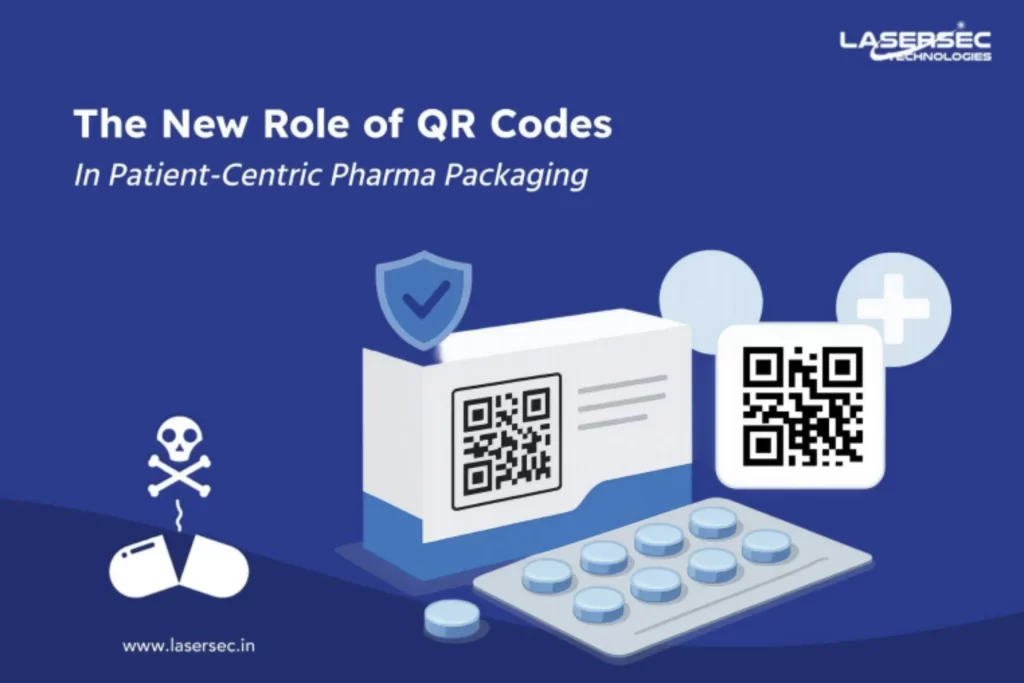
QR codes are reshaping the way pharmaceutical brands connect with patients. What once served as a simple tool for authentication has now evolved into a gateway to information, transparency, and trust.
Today’s patients expect more — they want packaging that not only protects but also guides, educates, and supports. This shift marks the rise of patient-centric pharma packaging, where every scan becomes an opportunity for connection and care.
Turning Every Scan into a Smart Pharma Experience
Each QR code scan now opens a digital window of clarity and support.
With one scan, patients can instantly access:
Dosage and usage instructions
Multilingual digital leaflets
Expiry, batch, and manufacturing details
Easy reorder and refill links
Direct customer support channels
Instant product authentication
Every interaction replaces uncertainty with confidence — turning static packaging into a smart, helpful, and patient-friendly experience powered by Track & Trace Technology.
Making Healthcare More Accessible and Inclusive
In a diverse market like India — and across global regions — accessibility is key. Printed leaflets can be limiting, especially for patients with visual impairments, language barriers, or low literacy.
QR-based pharma packaging makes information universally available. Patients can:
Watch explained videos in their preferred language
Read digital leaflets with enlarged text
Access audio or visual dosage guides
Learn safe medicine usage anytime, anywhere
For senior citizens and patients managing chronic conditions, this digital inclusion ensures safe, confident, and independent medication use.
Empowering Pharma Brands Through Transparency
For brands, the benefits go far beyond compliance. Smart QR integration empowers pharmaceutical companies to:
Build patient trust through transparent, verifiable data
Enable post-purchase engagement via digital refills and reminders
Reduce leaflet printing costs and packaging clutter
Collect anonymized insights on product usage (while protecting patient privacy)
By merging authentication, traceability, and engagement, brands transform packaging into a platform for education, loyalty, and lasting care — supported by Anti-Counterfeit Labels with QR Code.
Future-Proofing with Compliance and Sustainability
With evolving mandates like India’s Pharma QR Code Directive and the EU’s Digital Product Passport, digital-first packaging is no longer optional — it’s the new standard.
Simplify global exports with adaptable, multilingual labels
Reduce paper waste through digital leaflets — supporting sustainability goals
Streamline verification processes for regulators and distributors
It’s a smart, sustainable, and compliant way to protect both patients and the brand.
Technology That Builds Trust — Not Distance
In an era of increasing digitization, human connection must remain central. When used meaningfully, QR codes don’t create distance — they strengthen it.
Each scan becomes a symbol of care, offering immediate access to help, clarity, and reassurance. Behind every code is a message that says: “This brand is here for you.”
Explore how Lasersec Phygital Solutions bridge the gap between physical packaging and digital engagement — keeping patient trust at the heart of every innovation.
How Lasersec Technologies Helps Pharma Brands Lead with Smart QR Solutions
At Lasersec Technologies, we specialize in helping pharmaceutical brands upgrade to intelligent, secure, and globally compliant QR-based packaging systems.
Our solutions combine:
GS1-compliant serialization for global traceability
Patient engagement portals for real-time education and support
From factory to pharmacy, we enable brands to meet regulatory standards while building transparency and trust at every step.
Reach out to us via our Contact Page or call +91-9810213127 to learn how our QR solutions can help your brand deliver smarter, safer, and more patient-centric experiences.
How are QR codes improving patient-centric pharmaceutical packaging?
QR codes transform traditional medicine packaging into an interactive information hub. By scanning a code with a smartphone, patients can access dosage instructions, digital package inserts, product authentication, multilingual resources, and support information, making medicines easier and safer to use. Discover howdynamic QR codes are the gateway to real-time consumer assurance in pharmaceutical packaging, and learn howinnovations in pharmaceutical packaging design are using QR Code Authentication and Track & Trace Technology to put patients first.
Can QR codes help pharmaceutical companies combat counterfeit medicines?
Yes. QR codes linked to secure authentication platforms allow patients, pharmacies, and distributors to verify whether a medicine is genuine. When integrated with serialization and Track & Trace Technology, they help detect suspicious products, improve supply chain visibility, and strengthen brand protection. See howphygital packaging stops counterfeit medicines through instant QR-based verification, and explore ourAnti-Counterfeit Labels with QR Code solutions for enhanced pharmaceutical security.
Why are pharmaceutical companies investing in smart QR-enabled packaging?
Smart QR-enabled packaging supports patient education, simplifies access to digital information, enhances transparency, reduces dependence on printed leaflets, and enables post-purchase engagement. It also helps manufacturers meet evolving regulatory and traceability requirements while improving the overall patient experience. Learn howthe shift from traditional labels to interactive packaging is transforming pharma brands, and explore how combiningQR-based authentication with Phygital Solutions creates a more connected healthcare journey.
Is QR-based pharmaceutical packaging beneficial for regulatory compliance and sustainability?
Yes. Digital QR-enabled packaging can support serialization initiatives, Track & Trace programs, multilingual information delivery, and digital documentation while reducing paper-based inserts. This helps manufacturers adapt to changing compliance requirements and sustainability goals without compromising patient access to important product information. Explore howsmart label technology meets EU Digital Product Passport and serialization compliance and learn more about ourTrack & Trace Technology andPhygital Solutions.
What should pharmaceutical manufacturers look for in a QR code packaging solution?
How are QR codes improving patient-centric pharmaceutical packaging?
QR codes transform traditional medicine packaging into an interactive information hub. By scanning a code with a smartphone, patients can access dosage instructions, digital package inserts, product authentication, multilingual resources, and support information, making medicines easier and safer to use. Discover howdynamic QR codes are the gateway to real-time consumer assurance in pharmaceutical packaging, and learn howinnovations in pharmaceutical packaging design are using QR Code Authentication and Track & Trace Technology to put patients first.
Can QR codes help pharmaceutical companies combat counterfeit medicines?
Yes. QR codes linked to secure authentication platforms allow patients, pharmacies, and distributors to verify whether a medicine is genuine. When integrated with serialization and Track & Trace Technology, they help detect suspicious products, improve supply chain visibility, and strengthen brand protection. See howphygital packaging stops counterfeit medicines through instant QR-based verification, and explore ourAnti-Counterfeit Labels with QR Code solutions for enhanced pharmaceutical security.
Why are pharmaceutical companies investing in smart QR-enabled packaging?
Smart QR-enabled packaging supports patient education, simplifies access to digital information, enhances transparency, reduces dependence on printed leaflets, and enables post-purchase engagement. It also helps manufacturers meet evolving regulatory and traceability requirements while improving the overall patient experience. Learn howthe shift from traditional labels to interactive packaging is transforming pharma brands, and explore how combiningQR-based authentication with Phygital Solutions creates a more connected healthcare journey.
Is QR-based pharmaceutical packaging beneficial for regulatory compliance and sustainability?
Yes. Digital QR-enabled packaging can support serialization initiatives, Track & Trace programs, multilingual information delivery, and digital documentation while reducing paper-based inserts. This helps manufacturers adapt to changing compliance requirements and sustainability goals without compromising patient access to important product information. Explore howsmart label technology meets EU Digital Product Passport and serialization compliance and learn more about ourTrack & Trace Technology andPhygital Solutions.
What should pharmaceutical manufacturers look for in a QR code packaging solution?
A pharmaceutical product entering regulated markets goes through extensive validation before reaching patients. Manufacturing protocols, quality checks, serialization requirements, and regulatory documentation ensure that the product complies with strict global standards.
Despite these safeguards, pharmaceutical recalls continue to occur across global markets.
In many cases, recalls are not only triggered by manufacturing defects but also by packaging tampering, counterfeit infiltration, labeling inconsistencies, or supply chain diversion.
For pharmaceutical manufacturers operating in highly regulated markets, a recall can have significant consequences.
It disrupts supply chains, affects patient access to essential medicines, triggers regulatory scrutiny, and can cause lasting reputational damage.
To reduce these risks, many pharmaceutical companies are adopting multilayer security labels as part of their packaging strategy.
These advanced labels integrate multiple security technologies—such as tamper-evident features, holographic authentication, serialization layers, and Track & Trace capabilities—creating a powerful system that strengthens product integrity throughout the supply chain.
Understanding Recall Risks in Highly Regulated Pharmaceutical Markets
Pharmaceutical recalls occur when products must be removed from distribution due to safety concerns, regulatory non-compliance, or product authenticity issues.
Common triggers for recalls include:
Packaging tampering or seal integrity failure
Counterfeit products entering distribution channels
Labeling or identification inconsistencies
Unauthorized product diversion
Inability to verify product origin or authenticity
Regulatory authorities require manufacturers to demonstrate strong product traceability and packaging integrity across the entire supply chain.
If a product cannot be verified quickly or if packaging authenticity becomes questionable, regulators may require precautionary recalls even when the drug itself is safe.
This makes packaging security a critical component of recall prevention.
The Limitations of Single-Layer Packaging Security
Many pharmaceutical products still rely on single-layer security mechanisms such as basic tamper seals or printed authentication elements.
While these measures provide some level of protection, they are often insufficient against modern counterfeiting techniques.
Single-layer packaging security can be vulnerable because:
Tamper seals can sometimes be removed and replaced
Printed security features can be copied or replicated
Labels without serialization cannot provide unique product identification
Lack of traceability limits supply chain visibility
When packaging security is limited to a single protection mechanism, it becomes easier for counterfeiters or unauthorized distributors to bypass detection.
This increases the likelihood that compromised products may reach distribution networks before being identified.
What Are Multilayer Security Labels in Pharmaceutical Packaging
Multilayer security labels combine multiple authentication and protection technologies within a single packaging element.
Instead of relying on one security feature, multilayer labels integrate several layers of protection that work together to safeguard product integrity.
These labels typically include:
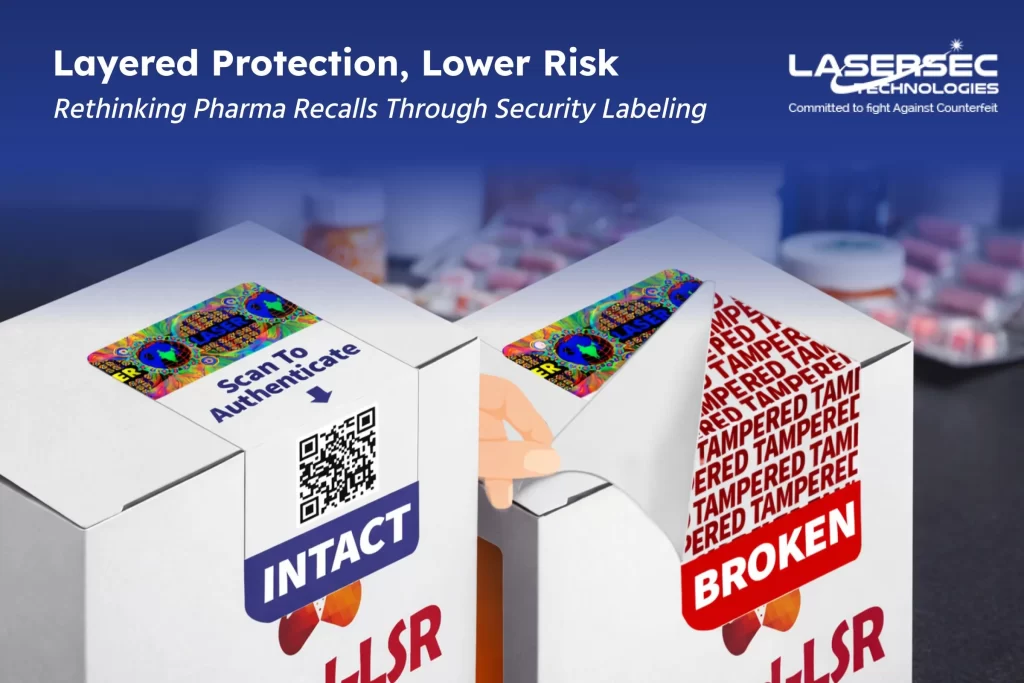
Tamper-evident structures that reveal if packaging has been opened
Holographic security elements that are extremely difficult to replicate
Serialized identification codes linked to product data
Each layer adds an additional barrier against counterfeiting, tampering, and supply chain manipulation.
Together, these features transform a simple packaging label into a comprehensive security platform.
The Role of Tamper-Evident Features in Preventing Packaging Compromise
Tamper-evident security is one of the most important components of multilayer pharmaceutical labels.
These features are designed to clearly indicate if a package has been opened or altered after leaving the manufacturing facility.
Tamper-evident labels may include mechanisms such as:
VOID security patterns that appear when labels are removed
Destructible label materials that break during removal
Adhesive residue that reveals interference
Security cuts or structural damage indicators
If tampering occurs, the label cannot be restored to its original condition.
This provides immediate visual evidence that packaging integrity has been compromised.
In regulated pharmaceutical markets, such clear tamper indicators are critical for maintaining product safety and preventing compromised medicines from reaching patients.
Strengthening Authentication with Holographic Security Layers
Holographic security features add an additional layer of authentication to pharmaceutical packaging.
Unlike conventional printing, holograms use complex optical structures that create dynamic visual effects under different lighting conditions.
These features are extremely difficult to reproduce using standard printing technologies.
In pharmaceutical labels, holographic elements help:
Provide visible authentication for regulators and distributors
Deter counterfeit replication of packaging
Enhance brand identification and packaging security
Because holographic technology requires specialized manufacturing processes, counterfeiters find it significantly harder to replicate these security elements accurately.
Serialization is a regulatory requirement in many pharmaceutical markets worldwide.
Serialized labels assign unique identification codes to each individual product unit, enabling precise tracking throughout the supply chain.
These codes may appear in the form of:
Serialized QR codes
Data matrix codes
Unique product identifiers linked to databases
Serialization allows manufacturers and regulators to verify:
Product origin
Manufacturing batch information
Distribution records
Product authenticity
If duplicate or invalid codes are detected, the system can immediately flag potential counterfeit activity.
This capability significantly reduces the risk of counterfeit products entering legitimate pharmaceutical distribution channels.
How Track & Trace Systems Improve Recall Management
Track & Trace technology provides a digital infrastructure that connects serialized packaging data with supply chain monitoring systems.
Every time a serialized product code is scanned within the supply chain, a verification record can be created.
This provides valuable visibility into product movement across markets.
Track & Trace systems allow pharmaceutical companies to:
Monitor distribution channels
Identify unauthorized product diversion
Detect suspicious product scans
Verify product authenticity instantly
If a potential issue arises, manufacturers can quickly identify affected product batches and isolate them before they spread through the supply chain.
This precision significantly reduces the scale and impact of potential recalls.
Why Quality and Regulatory Leaders Are Prioritizing Multilayer Security Labels
Quality assurance leaders, regulatory compliance teams, and supply chain managers are increasingly recognizing that packaging security plays a critical role in risk mitigation.
Multilayer security labels offer several advantages for regulated pharmaceutical markets:
Strong protection against counterfeit infiltration
Faster identification and containment of supply chain risks
These benefits help manufacturers maintain compliance while reducing the likelihood of large-scale recalls triggered by packaging authenticity concerns.
How Lasersec Technologies Supports Secure Pharmaceutical Labeling
At Lasersec Technologies, we develop advanced multilayer security labels designed to help pharmaceutical manufacturers protect products in regulated markets.
Our solutions combine tamper-evident label structures, holographic security elements, serialization-ready designs, and authentication capabilities to create a comprehensive packaging protection system.
These multilayer labels help pharmaceutical companies:
By integrating multiple security layers into pharmaceutical packaging, we help manufacturers enhance both product safety and regulatory confidence.
A customer purchases a premium electronic device expecting authenticity, performance, and reliability. The product box looks genuine, the branding appears correct, and the device functions as expected.
However, in today’s global electronics market, appearance alone is no longer enough to guarantee authenticity.
Counterfeit electronics have become increasingly sophisticated. Fake devices often replicate packaging designs, branding elements, and labeling with alarming accuracy.
This creates uncertainty for consumers and significant challenges for electronics manufacturers trying to protect their products and brand reputation.
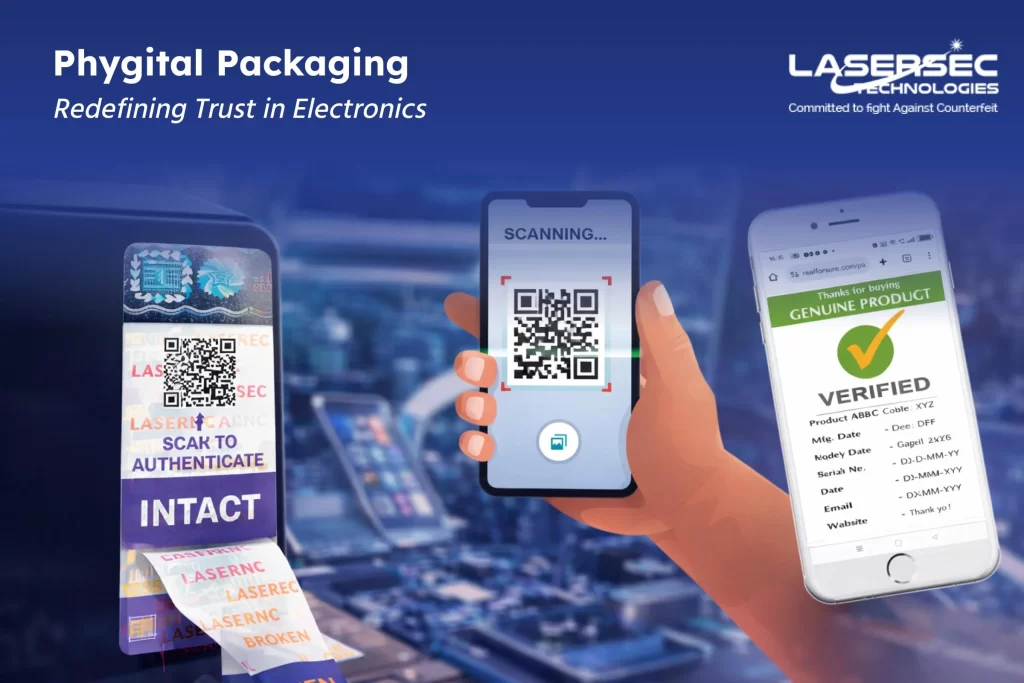
Phygital packaging combines physical security technologies like holograms with digital verification tools such as scannable QR codes. This integration transforms product packaging into a secure authentication gateway using solutions like phygital packaging technology, allowing instant product verification and improving transparency across the supply chain.
The Growing Counterfeit Threat in Consumer Electronics
Consumer electronics is one of the fastest-growing global industries. Products such as smartphones, headphones, smart devices, gaming consoles, and accessories move rapidly across international supply chains.
This high demand and fast product turnover make electronics a major target for counterfeiters.
Counterfeit products often mimic genuine packaging so closely that consumers cannot easily identify the difference. In some cases, counterfeit devices even enter legitimate retail environments.
Common risks in electronics markets include:
Counterfeit devices packaged to resemble genuine products
Unauthorized refurbished products sold as new
Repackaged or modified devices
Parallel market distribution
Fake accessories sold under well-known brand names
These issues damage consumer confidence and create serious brand protection challenges for manufacturers.
As a result, electronics companies are increasingly investing in packaging technologies that allow instant product authentication and transparency.
Understanding the Concept of Phygital Packaging
Phygital packaging refers to the integration of physical packaging security features with digital authentication systems.
The goal is to create a packaging system that not only protects the product physically but also connects consumers, distributors, and brands through a digital verification layer.
In consumer electronics packaging, phygital solutions typically combine:
When these technologies are integrated into packaging, each product unit gains a unique, verifiable identity.
Consumers can scan the code using a smartphone to instantly confirm whether the product is genuine.
How Holography Strengthens Physical Packaging Security
Holographic security elements are widely used in brand protection because they are extremely difficult to replicate using conventional printing methods.
Holograms contain complex optical structures that produce dynamic visual effects when viewed under different lighting angles.
These effects cannot be easily reproduced by counterfeiters.
In consumer electronics packaging, holographic security labels help by providing:
A visible authentication element for consumers and retailers
A strong deterrent against counterfeit replication
Distinctive brand identity integrated into packaging
Security features that are difficult to duplicate
Because holograms rely on specialized manufacturing technologies, counterfeiters find it challenging to reproduce them accurately.
The Role of Scannable QR Codes in Digital Authentication
While holograms provide strong visual security, digital authentication technologies allow deeper verification capabilities.
Scannable QR codes are one of the most widely adopted authentication tools in modern packaging systems.
When integrated into electronics packaging, QR codes can connect consumers directly to secure authentication platforms.
By scanning the QR code, users can instantly verify:
Product authenticity
Manufacturing information
Authorized distribution details
Warranty registration
Product origin and verification status
This creates a transparent authentication process that improves consumer confidence and reduces the risk of counterfeit purchases.
Combining Holograms and QR Codes for Stronger Phygital Security
The real power of phygital packaging emerges when physical and digital security features work together.
A holographic label provides visible authentication that signals product security, while the QR code enables instant digital verification.
This layered approach offers several advantages:
Visual authentication through holographic security
Instant digital verification through QR scanning
Unique product identification for each unit
Data collection on product verification activity
Detection of suspicious or duplicate scans
For electronics brands, this combination significantly strengthens product authentication and counterfeiting prevention.
Building Brand Transparency Through Smart Packaging
Modern consumers increasingly expect transparency from brands, particularly when purchasing premium electronics products.
Phygital packaging helps brands provide this transparency by allowing consumers to interact directly with product authentication systems.
When users scan authentication codes, they can access information such as:
Product origin
Manufacturing authenticity
Product specifications
Warranty details
Brand verification messages
This interaction builds confidence that the product is genuine while also creating a stronger connection between the brand and the consumer.
For electronics manufacturers, this transparency strengthens brand credibility and customer trust.
Improving Supply Chain Visibility with Phygital Authentication
Phygital packaging solutions also provide important benefits beyond consumer authentication.
Because each product unit includes a unique digital identity, brands can track product verification activity across different markets.
This enables manufacturers to:
Detect counterfeit activity in specific regions
Identify unauthorized distribution channels
Monitor product movement across supply chains
Strengthen global brand protection strategies
Track & Trace systems integrated with phygital packaging allow companies to shift from reactive counterfeit detection to proactive supply chain monitoring.
Why Consumer Electronics Brands Are Adopting Phygital Packaging
Electronics manufacturers operate in highly competitive global markets where product authenticity and brand reputation are critical.
Phygital packaging solutions provide a powerful way to protect products while also improving consumer engagement.
Key benefits include:
Strong anti-counterfeit protection
Instant product authentication
Enhanced brand transparency
Improved supply chain visibility
Greater consumer trust
These advantages make phygital packaging an increasingly important tool for electronics brands seeking to secure their products and strengthen customer confidence.
How Lasersec Technologies Enables Phygital Brand Protection
At Lasersec Technologies, we provide advanced phygital packaging solutions designed to help electronics brands protect products and enhance brand transparency.
Our solutions combine holographic security technologies with scannable authentication systems, creating a powerful integration of physical and digital product protection.
These solutions enable electronics manufacturers to:
Prevent counterfeit electronic products
Enable instant product authentication through QR codes
Strengthen brand protection strategies
Improve supply chain monitoring
Build consumer trust through transparent verification
By merging holographic security with digital authentication technologies, we help brands transform packaging into an intelligent brand protection platform.
In today’s apparel industry, transparency is no longer optional. Customers expect to know where their garments come from, how materials were sourced, and whether the brand operates responsibly. Export buyers demand even more — they require verified proof, backed by data, not claims.
This shift has pushed apparel manufacturers to strengthen supply chain visibility. Among all available tools, traceable labels have emerged as one of the most effective ways to build trust, ensure compliance, and protect brand authenticity. They are now becoming a core requirement across global fashion supply chains.
Why the Apparel Industry Needs Stronger Transparency
The fashion supply chain moves through multiple factories, vendors, dyeing units, finishing plants, and regions. With so many touchpoints, information becomes scattered — creating challenges such as:
Buyers requiring verified sourcing and production details
Consumers demanding clarity before trusting brands
Sustainability teams needing accurate reporting data
Counterfeit garments entering the market and diluting brand value
When information is difficult to verify, trust is lost even before the product is evaluated.
What Traceable Labels Actually Do
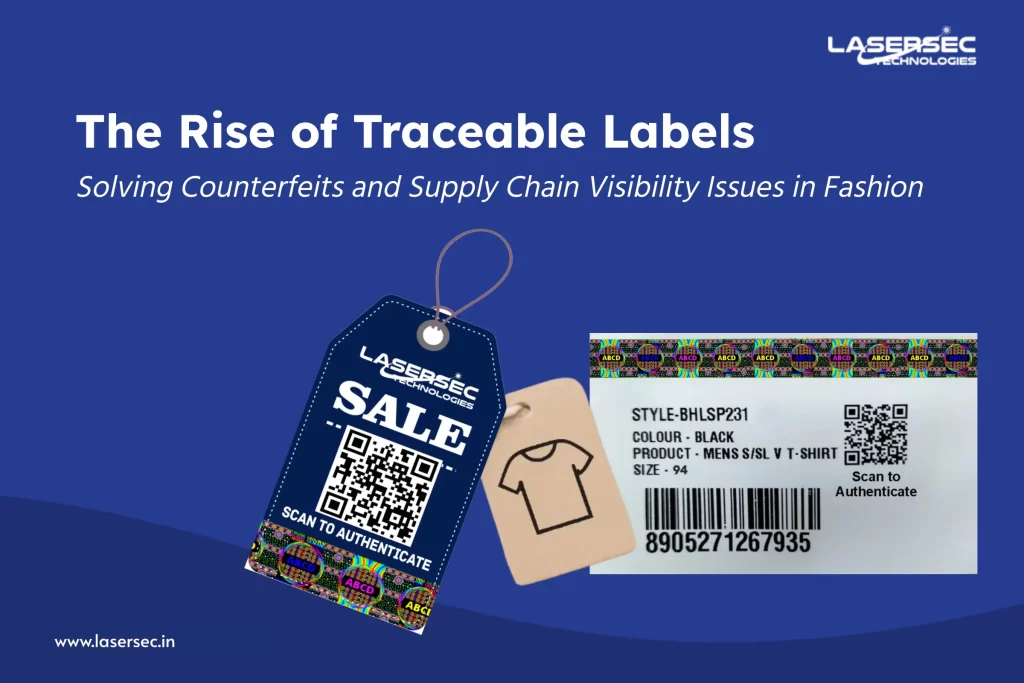
Traceable apparel labels give customers, buyers, auditors, and compliance teams instant access to reliable information.
With a single scan, they can view:
Sourcing origin of the garment
Material composition and sustainability data
End-to-end journey from factory to store
Processing and manufacturing checkpoints
Care instructions, ethics, and certifications
Authenticity verification to stop counterfeits
In seconds, the garment becomes a transparent digital product passport — simple for brands, reassuring for buyers, and reliable for audits. Learn more about the technology behind this in our Track & Trace systems.
How Traceable Labels Strengthen Your Brand
1. They Build Instant Trust
Clear, verified, and accessible information increases customer confidence and loyalty.
2. They Protect Against Counterfeits
Fast fashion and export markets face high imitation risks. One scan verifies authenticity instantly. Explore the solutions used for this in our anti-counterfeit product gallery.
3. They Help You Win Export Orders
EU and global buyers expect traceability, documentation, and proof of responsible sourcing. Verified labeling helps your products stand out.
4. They Make Sustainability Measurable
Traceability allows brands to back sustainability claims with data — improving credibility.
5. They Reduce Audit Delays
All manufacturing and sourcing information is digitized, making buyer inspections faster and smoother.
A Moment Every Apparel Team Will Recognize
A European buyer asks your production team:
“Can you provide the complete sourcing journey of this garment?”
Your team searches through emails, spreadsheets, and vendor files.
Now imagine a different scenario:
The buyer scans the label — the entire journey appears instantly, verified and timestamped.
That is the efficiency of a traceable apparel supply chain. No confusion. No delays. No gaps.
Why This Matters to Today’s Apparel Professionals
If you are an apparel manufacturer, sustainability officer, export merchandiser, or compliance lead, you know the landscape is changing:
How Lasersec Technologies Helps You Deliver True Transparency
We support apparel brands with ready-to-deploy traceability and anti-counterfeit solutions built for real manufacturing conditions. Our systems are simple to adopt, scalable across factories, and aligned with global compliance demands.
We offer:
Traceable labels with instant scan-based information
Anti-counterfeit garment tags
QR-enabled fabric and apparel tracking
Digital product journeys for full supply chain visibility
Authenticity verification tools
Sustainable material tagging systems
These solutions help brands present their true story — clearly, responsibly, and confidently — whether the focus is export, premium retail, or sustainable fashion.
With us, you can deliver the transparency your buyers expect today and stay ready for the global standards of tomorrow. Explore how these work:
Our goal is to help you present your brand’s true story clearly, responsibly, and confidently — whether you’re targeting exports, premium retail, or sustainable fashion.
With us, you can deliver the transparency your buyers expect today and stay fully prepared for the global standards of tomorrow.
Ready-to-eat (RTE) foods have become a major part of modern consumer lifestyles.
From packaged meals and frozen foods to ready-to-cook snacks and convenience products, consumers increasingly rely on packaged food that can be consumed quickly with minimal preparation.
However, as the demand for convenience foods grows, so does the importance of ensuring packaging safety and integrity.
Unlike traditional packaged goods, ready-to-eat products are consumed directly by consumers. Any tampering with the packaging can pose immediate health risks.
For food manufacturers and FMCG brands, ensuring that packaging clearly shows any sign of interference has become a critical safety requirement.
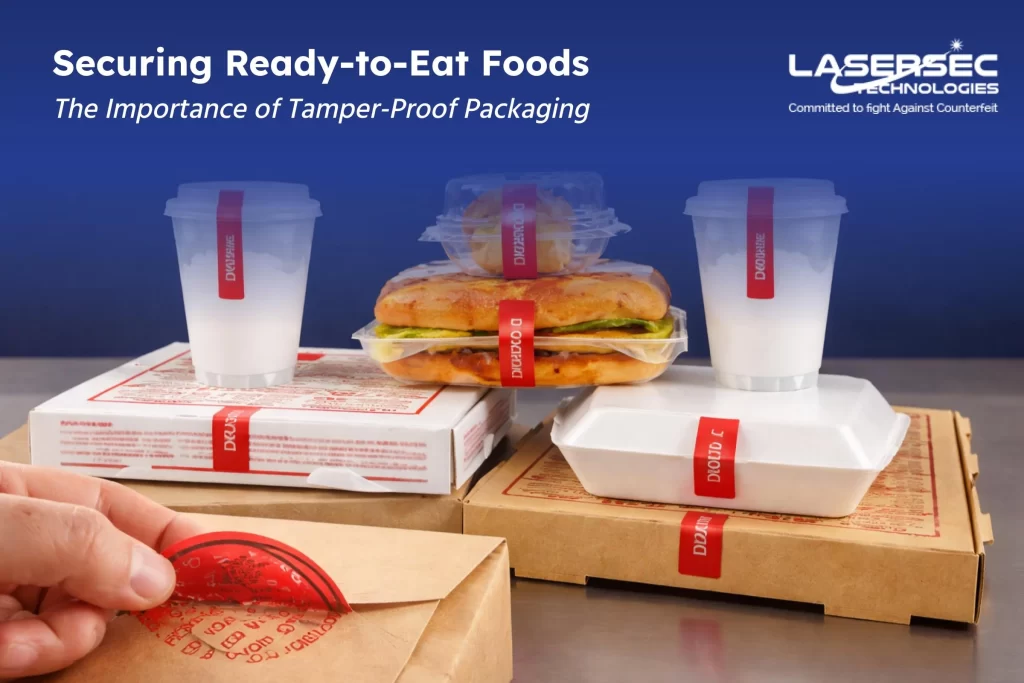
This is where tamper-proof packaging solutions such as security seals, tear bands, and tamper-evident labels play a vital role in protecting both consumers and brand reputation.
Ready-to-eat foods move through complex distribution networks before reaching consumers.
Products may pass through multiple stages including manufacturing plants, cold storage facilities, transport hubs, retail stores, and delivery services.
At each stage, the product may be handled by several intermediaries.
Without proper tamper-evident protection, it can be difficult to determine whether a food package has been opened or compromised during distribution.
Even minor tampering can create serious risks such as:
Food contamination
Product spoilage
Loss of product freshness
Consumer health hazards
Brand reputation damage
For products that are meant to be consumed immediately, packaging integrity becomes one of the most important safety indicators.
The Rising Risk of Food Tampering in Modern Supply Chains
Food tampering incidents, although rare, can have severe consequences for both consumers and brands.
In the case of ready-to-eat products, tampering may involve:
Opening packaging and resealing it
Altering or contaminating food contents
Replacing products with lower-quality alternatives
Damaging protective seals during handling
Because ready-to-eat foods often rely on sealed packaging to maintain hygiene and freshness, any compromise in packaging integrity can undermine product safety.
For FMCG companies, preventing tampering is therefore not just a packaging concern but a food safety priority.
Key Tamper-Proof Packaging Solutions for Ready-to-Eat Foods
Modern food packaging uses several mechanisms to provide clear visual evidence of tampering.
These solutions help consumers, retailers, and inspectors easily identify whether a package has been opened or altered.
Some of the most widely used tamper-evident packaging features include:
Security Seals
Security seals are applied to food packaging to ensure that the product remains unopened until it reaches the consumer.
Once broken, the seal cannot be restored to its original state.
Security seals are commonly used for:
Meal trays
Frozen food containers
Jar lids
Beverage caps
Food cartons
Tear Bands and Breakable Rings
Tear bands are thin strips integrated into packaging that must be removed before opening the product.
These bands break permanently when opened, providing immediate visual evidence that the package has been accessed.
They are frequently used in:
Frozen food containers
Bottled sauces
Packaged beverages
Sealed food jars
Tamper-Evident Labels
Tamper-evident labels provide additional protection by revealing any attempt to remove or reposition the label.
These labels may include features such as:
Destructible material that breaks when peeled
Security patterns that appear when tampered with
Adhesive residues that indicate interference
Because these labels cannot be reapplied cleanly, they help ensure packaging authenticity.
Visual Tamper Evidence: Why It Matters to Consumers
One of the most important aspects of food packaging security is visible assurance.
Consumers often rely on simple visual cues to determine whether a product is safe to consume.
If packaging appears compromised or damaged, consumers are far less likely to purchase the product.
Clear visual tamper indicators help consumers quickly confirm that:
Our solutions integrate tamper-evident labels, security seals, and authentication technologies that help ensure product safety throughout the supply chain.
These solutions help FMCG brands:
Protect ready-to-eat and frozen food packaging
Prevent unauthorized opening or resealing
Provide visible tamper evidence for consumers
Strengthen food safety compliance
Safeguard brand reputation in competitive markets
By integrating security directly into packaging, food manufacturers can maintain product integrity from production to consumption.