







Lasersec Technologies

Dynamic QR Codes: The Gateway to Real-Time Consumer Assurance

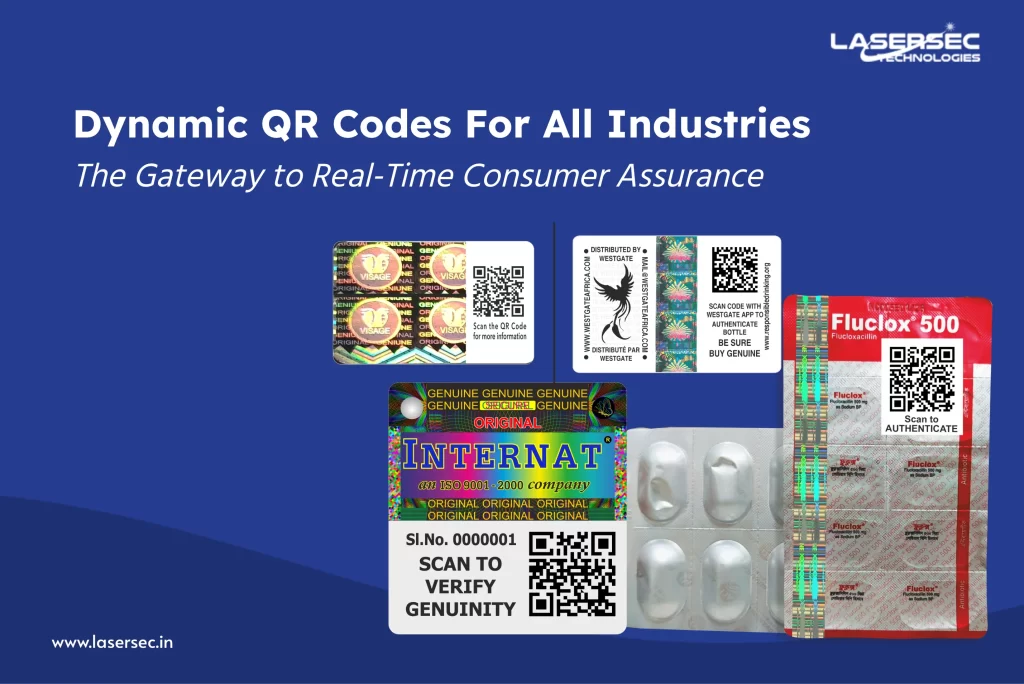
In an era where consumer trust is paramount, ensuring product authenticity and transparency has become non-negotiable for brands across industries. Enter Dynamic QR Codes — a powerful tool that offers real-time product verification, bridging the gap between brands and consumers like never before. These time-sensitive codes are not just transforming how we verify products but are also enhancing supply chain transparency and strengthening anti-counterfeiting measures.

What Are Dynamic QR Codes?

Unlike static QR codes, which carry fixed information, Dynamic QR Codes are flexible and customizable. They store information on a server rather than within the code itself, allowing the data linked to the code to be updated or modified even after the code is printed. This adaptability makes them a game-changer for industries requiring real-time updates and robust product authentication.

Why Time-Sensitive Product Verification Matters

Counterfeit goods are a growing global problem, infiltrating sectors from pharmaceuticals to electronics. For consumers, purchasing a counterfeit product doesn’t just lead to financial loss—it can jeopardize health and safety. Time-sensitive verification, enabled by Dynamic QR Codes, ensures that consumers can access accurate and up-to-date information about a product’s authenticity, origin, and journey through the supply chain.

Features of Dynamic QR Codes

  • Real-Time Updates: Dynamic QR Codes can relay updated product information, such as expiration dates, batch details, or recall notifications, ensuring consumers always have the latest details.
  • Tamper-Evident Security: By integrating unique identifiers and linking them to a secure database, these codes reveal tampering or unauthorized changes instantly.
  • Enhanced Traceability: Each scan logs data on the product’s movement through the supply chain, enabling both brands and consumers to verify its journey.
  • Scalability: From individual products to entire batches, Dynamic QR Codes offer a scalable solution for brands of all sizes.
  • Consumer Engagement: These codes can link consumers to loyalty programs, product instructions, or sustainability initiatives, creating a richer user experience.

Real-World Applications of Dynamic QR Codes

Pharmaceuticals

Ensuring that patients receive genuine, safe medications is critical. A quick scan of a Dynamic QR Code on packaging can confirm a drug’s authenticity and provide dosage instructions or recall alerts in real-time.

Food and Beverages

Dynamic QR Codes help consumers track a product’s origin and freshness. For example, a scan on a juice bottle might reveal its farm-to-table journey, including harvesting and processing dates.

Electronics

Counterfeit electronic components can lead to safety hazards. Dynamic QR Codes allow buyers to verify the authenticity of components and access warranty or repair information instantly.

Luxury Goods

High-value items like watches and handbags are frequent targets for counterfeiters. Dynamic QR Codes not only confirm authenticity but can also share care instructions or link to exclusive brand content.

Benefits for Brands and Consumers

  • Building Consumer Trust
    When consumers can verify a product’s authenticity with ease, their trust in the brand strengthens. This trust translates to higher customer retention and loyalty.
  • Streamlining Recall Management
    In the event of a product recall, Dynamic QR Codes enable quick identification of affected batches, ensuring swift and effective action.
  • Combating Counterfeiting
    By providing an unalterable and unique identifier for each product, Dynamic QR Codes make counterfeiting significantly more difficult.
  • Enhancing Brand Transparency
    Sharing a product’s story, from sourcing to delivery, allows brands to showcase their commitment to quality and sustainability.

How to Implement Dynamic QR Codes Effectively

  • Choose a Secure Platform: Opt for a platform that offers encryption and robust data management to prevent tampering.
  • Integrate with Your Supply Chain: Ensure seamless integration with existing supply chain management systems for real-time updates.
  • Educate Your Consumers: Promote awareness about the benefits of scanning Dynamic QR Codes and how they enhance product safety and transparency.
  • Leverage Analytics: Use scan data to gain insights into consumer behavior and product performance.

Dynamic QR Codes are more than just a product verification tool; they are a gateway to real-time consumer assurance, enhanced brand loyalty, and fortified supply chains. By embracing this innovative technology, brands can stay ahead in the fight against counterfeiting while fostering deeper connections with their consumers.

At Lasersec Technologies, we specialize in advanced anti-counterfeit solutions, including Dynamic QR Codes tailored to meet your industry’s unique challenges. Let us help you ensure your products’ authenticity and build trust with your consumers.

Ready to transform your product verification process? Contact us at mktg@lasersec.in or call +91-9810213127 to learn more about Dynamic QR Codes and how they can benefit your business.
Share :

Frequently Asked Questions

Related Blogs

Phygital packaging with secure QR code and authentication features protecting electronic products from counterfeiting.

A customer purchases a premium electronic device expecting authenticity, performance, and reliability. The product box looks genuine, the branding appears correct, and the device functions as expected.

However, in today’s global electronics market, appearance alone is no longer enough to guarantee authenticity.

Counterfeit electronics have become increasingly sophisticated. Fake devices often replicate packaging designs, branding elements, and labeling with alarming accuracy.

This creates uncertainty for consumers and significant challenges for electronics manufacturers trying to protect their products and brand reputation.

To address this growing risk, many electronics brands are adopting phygital packaging solutions.

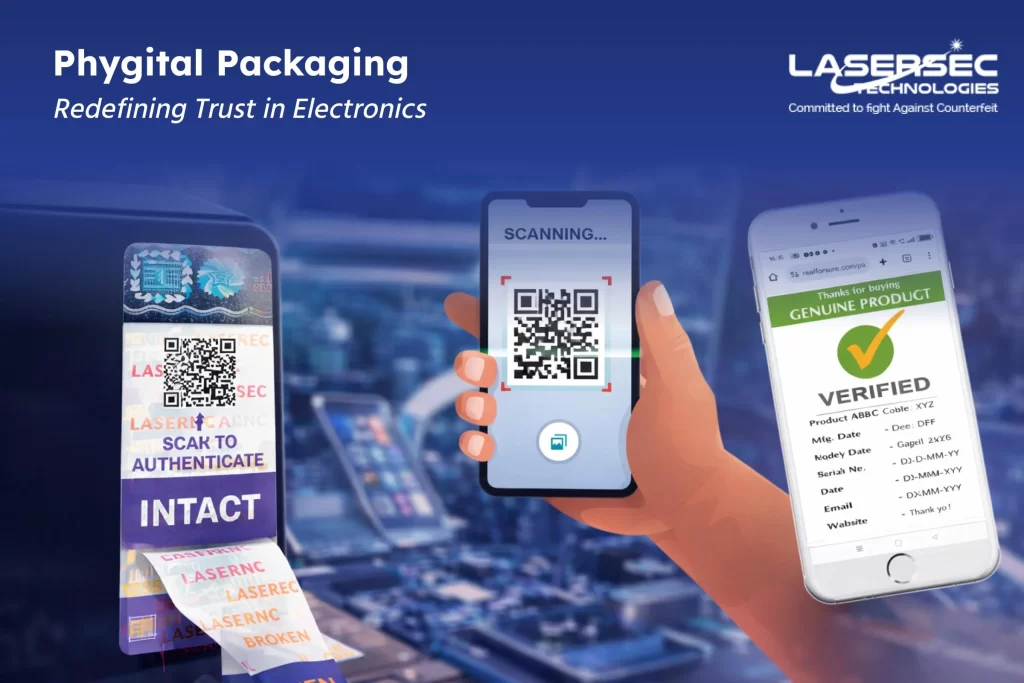
Phygital packaging combines physical security technologies like holograms with digital verification tools such as scannable QR codes. This integration transforms product packaging into a secure authentication gateway using solutions like phygital packaging technology, allowing instant product verification and improving transparency across the supply chain.

The Growing Counterfeit Threat in Consumer Electronics

Consumer electronics is one of the fastest-growing global industries. Products such as smartphones, headphones, smart devices, gaming consoles, and accessories move rapidly across international supply chains.

This high demand and fast product turnover make electronics a major target for counterfeiters.

Counterfeit products often mimic genuine packaging so closely that consumers cannot easily identify the difference. In some cases, counterfeit devices even enter legitimate retail environments.

Common risks in electronics markets include:

  • Counterfeit devices packaged to resemble genuine products
  • Unauthorized refurbished products sold as new
  • Repackaged or modified devices
  • Parallel market distribution
  • Fake accessories sold under well-known brand names

These issues damage consumer confidence and create serious brand protection challenges for manufacturers.

As a result, electronics companies are increasingly investing in packaging technologies that allow instant product authentication and transparency.

Understanding the Concept of Phygital Packaging

Phygital packaging refers to the integration of physical packaging security features with digital authentication systems.

The goal is to create a packaging system that not only protects the product physically but also connects consumers, distributors, and brands through a digital verification layer.

In consumer electronics packaging, phygital solutions typically combine:

When these technologies are integrated into packaging, each product unit gains a unique, verifiable identity.

Consumers can scan the code using a smartphone to instantly confirm whether the product is genuine.

How Holography Strengthens Physical Packaging Security

Holographic security elements are widely used in brand protection because they are extremely difficult to replicate using conventional printing methods.

Holograms contain complex optical structures that produce dynamic visual effects when viewed under different lighting angles.

These effects cannot be easily reproduced by counterfeiters.

In consumer electronics packaging, holographic security labels help by providing:

  • A visible authentication element for consumers and retailers
  • A strong deterrent against counterfeit replication
  • Distinctive brand identity integrated into packaging
  • Security features that are difficult to duplicate
Because holograms rely on specialized manufacturing technologies, counterfeiters find it challenging to reproduce them accurately.

The Role of Scannable QR Codes in Digital Authentication

While holograms provide strong visual security, digital authentication technologies allow deeper verification capabilities.

Scannable QR codes are one of the most widely adopted authentication tools in modern packaging systems.

When integrated into electronics packaging, QR codes can connect consumers directly to secure authentication platforms.

By scanning the QR code, users can instantly verify:

  • Product authenticity
  • Manufacturing information
  • Authorized distribution details
  • Warranty registration
  • Product origin and verification status
This creates a transparent authentication process that improves consumer confidence and reduces the risk of counterfeit purchases.

Combining Holograms and QR Codes for Stronger Phygital Security

The real power of phygital packaging emerges when physical and digital security features work together.

A holographic label provides visible authentication that signals product security, while the QR code enables instant digital verification.

This layered approach offers several advantages:

  • Visual authentication through holographic security
  • Instant digital verification through QR scanning
  • Unique product identification for each unit
  • Data collection on product verification activity
  • Detection of suspicious or duplicate scans
For electronics brands, this combination significantly strengthens product authentication and counterfeiting prevention.

Building Brand Transparency Through Smart Packaging

Modern consumers increasingly expect transparency from brands, particularly when purchasing premium electronics products.

Phygital packaging helps brands provide this transparency by allowing consumers to interact directly with product authentication systems.

When users scan authentication codes, they can access information such as:

  • Product origin
  • Manufacturing authenticity
  • Product specifications
  • Warranty details
  • Brand verification messages

This interaction builds confidence that the product is genuine while also creating a stronger connection between the brand and the consumer.

For electronics manufacturers, this transparency strengthens brand credibility and customer trust.

Improving Supply Chain Visibility with Phygital Authentication

Phygital packaging solutions also provide important benefits beyond consumer authentication.

Because each product unit includes a unique digital identity, brands can track product verification activity across different markets.

This enables manufacturers to:

  • Detect counterfeit activity in specific regions
  • Identify unauthorized distribution channels
  • Monitor product movement across supply chains
  • Strengthen global brand protection strategies

Track & Trace systems integrated with phygital packaging allow companies to shift from reactive counterfeit detection to proactive supply chain monitoring.

Why Consumer Electronics Brands Are Adopting Phygital Packaging

Electronics manufacturers operate in highly competitive global markets where product authenticity and brand reputation are critical.

Phygital packaging solutions provide a powerful way to protect products while also improving consumer engagement.

Key benefits include:

  • Strong anti-counterfeit protection
  • Instant product authentication
  • Enhanced brand transparency
  • Improved supply chain visibility
  • Greater consumer trust
These advantages make phygital packaging an increasingly important tool for electronics brands seeking to secure their products and strengthen customer confidence.

How Lasersec Technologies Enables Phygital Brand Protection

At Lasersec Technologies, we provide advanced phygital packaging solutions designed to help electronics brands protect products and enhance brand transparency.

Our solutions combine holographic security technologies with scannable authentication systems, creating a powerful integration of physical and digital product protection.

These solutions enable electronics manufacturers to:

  • Prevent counterfeit electronic products
  • Enable instant product authentication through QR codes
  • Strengthen brand protection strategies
  • Improve supply chain monitoring
  • Build consumer trust through transparent verification

By merging holographic security with digital authentication technologies, we help brands transform packaging into an intelligent brand protection platform.

Tamper-proof labels protecting high-value electronic gadgets

A high-value electronic device leaves the manufacturing facility after extensive quality testing, packaging verification, and distribution planning. The product is genuine, sealed, and ready to enter the global marketplace.

However, once electronics move through international supply chains, they pass through multiple intermediaries — distributors, logistics providers, retailers, service centers, and sometimes unauthorized resellers.

During this journey, products may be exposed to tampering, unauthorized repairs, counterfeit substitution, or component replacement.

In many cases, the packaging may appear intact while the product inside has already been altered.

For manufacturers of high-value gadgets such as smartphones, laptops, gaming devices, and premium electronics, protecting products from tampering is essential not only for brand protection but also for warranty integrity and customer trust.

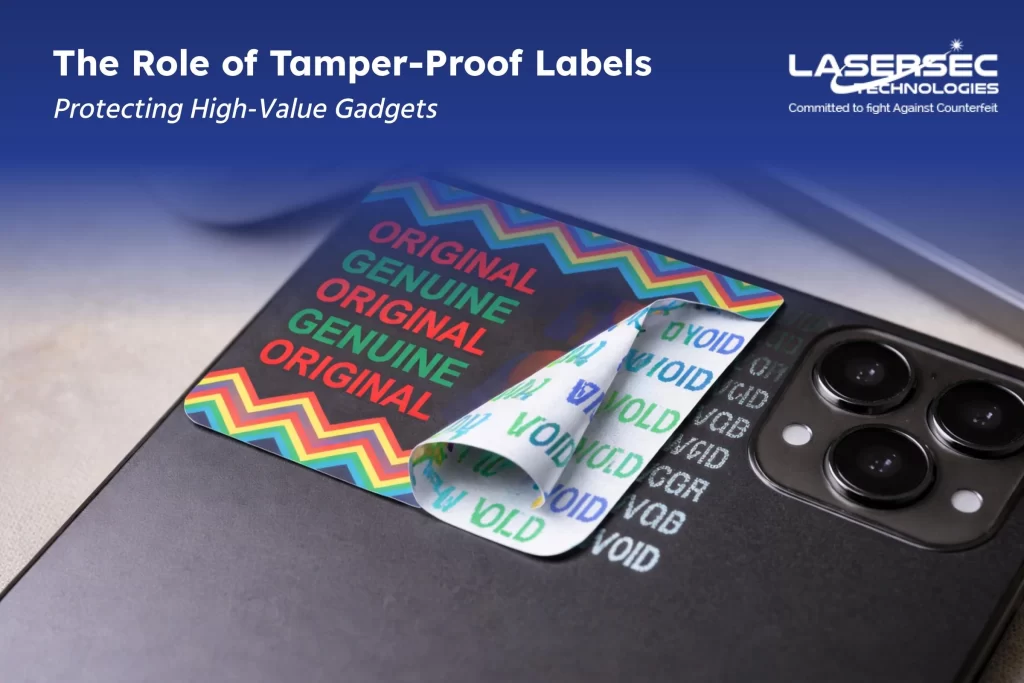
This is where tamper-proof labels and VOID security seals play a crucial role. These labels provide clear evidence if a product has been opened, altered, or interfered with after leaving the manufacturer using solutions like tamper-proof hologram stickers and VOID security holograms.

Why High-Value Electronics Are Frequent Targets for Tampering and Counterfeiting

High-value consumer electronics are among the most commonly targeted products for tampering and counterfeit activities.

Devices such as smartphones, tablets, gaming consoles, and premium accessories command strong resale value and move rapidly across global markets.

This makes them attractive targets for unauthorized activities including:

  • Product tampering before resale
  • Replacement of internal components
  • Refurbished products sold as new
  • Unauthorized warranty claims
  • Counterfeit products packaged to resemble genuine devices

These activities can occur at multiple points within the supply chain, especially when products move through parallel distribution channels or unauthorized resellers.

For electronics manufacturers, the consequences include:

  • Increased warranty fraud
  • Customer dissatisfaction and returns
  • Loss of brand credibility
  • Distribution channel conflicts
  • Financial losses from counterfeit and tampered devices
Without clear packaging security measures, detecting tampering becomes extremely difficult once the product reaches the market.

The Limitations of Standard Packaging in Protecting Electronic Devices

Traditional electronics packaging is designed primarily to protect devices from physical damage during transportation and storage.

While boxes, seals, and shrink wraps provide basic protection, they are not designed to prevent sophisticated tampering.

Standard packaging elements such as:

  • Printed seals
  • Adhesive stickers
  • Plastic shrink wrap
  • Standard barcode labels

can often be removed and replaced without leaving visible signs of interference.

This means a device can be opened, modified, and resealed while appearing completely new.

For high-value electronics, manufacturers require packaging solutions that can clearly indicate if a product has been accessed or altered after leaving the factory.

What Are Tamper-Proof Labels and How They Work

Tamper-proof labels are specialized security labels designed to reveal clear evidence when someone attempts to remove, reposition, or tamper with them.

Unlike standard labels, these security labels incorporate advanced adhesive technologies and structural designs that make removal impossible without leaving visible damage.

Once applied, tamper-proof labels create a permanent bond with the product surface.

If someone attempts to peel or remove the label, the label will either:

  • Break apart
  • Leave visible residue
  • Display a hidden security message

This makes it immediately clear that the product seal has been compromised.

Tamper-proof labels are widely used across electronics packaging to protect product integrity and ensure that devices reach consumers exactly as they left the manufacturer.

Understanding VOID Security Seals in Electronics Packaging

One of the most widely used tamper-evident technologies in electronics packaging is the VOID security label.

VOID labels contain a hidden security pattern embedded within the adhesive layer of the label.

When someone attempts to remove the label, the adhesive separates in a way that reveals a visible message such as:

  • VOID
  • OPENED
  • TAMPERED
This message appears either on the label itself, the product surface, or both. 
Once triggered, the VOID pattern cannot be reversed or concealed. This provides immediate visual evidence that the product seal has been broken.

VOID labels are particularly useful for:

  • Device packaging seals
  • Warranty protection seals
  • Electronic device enclosures
  • Service access points

Because the label cannot be reapplied without visible damage, it becomes a reliable indicator of product tampering.

Preventing Warranty Fraud with Tamper-Evident Security Labels

Warranty fraud is a major concern for electronics manufacturers.

When products are opened or modified by unauthorized service providers, manufacturers may still receive warranty claims if the product appears externally intact.

Tamper-proof labels and VOID seals provide a clear method for protecting warranty conditions.

Manufacturers often place these labels over key access points such as:

  • Device screws
  • Internal component panels
  • Battery compartments
  • Service access ports

If the label is damaged or removed, it immediately indicates that the product has been opened.

This allows service centers to quickly determine whether the warranty conditions have been violated.

By clearly signaling unauthorized access, tamper-evident labels reduce fraudulent warranty claims and help manufacturers maintain service integrity.

Strengthening Electronics Brand Protection with Tamper-Proof Labels

Tamper-proof labels also play an important role in preventing counterfeit electronics from entering legitimate distribution channels.

Counterfeiters often attempt to repackage fake or refurbished devices to resemble genuine products.

However, when manufacturers integrate secure tamper-evident labels into packaging, it becomes significantly harder to replicate the complete security structure.

Security labels may include additional authentication features such as:

These elements make the labels extremely difficult to reproduce and allow distributors and retailers to verify product authenticity more easily.

Enhancing Supply Chain Security for Electronic Devices

Electronics manufacturers rely on complex global supply chains involving multiple logistics partners, warehouses, distributors, and retailers.

Tamper-proof labels help maintain product integrity throughout this journey.

If a device is opened or interfered with during transit, the tamper-evident label provides immediate evidence.

This enables manufacturers and distributors to quickly identify potential supply chain issues such as:

  • Unauthorized product access
  • Product substitution
  • Refurbished products entering new inventory
  • Packaging tampering during transportation
This visibility strengthens supply chain security and helps ensure that genuine, untouched products reach consumers. To enhance monitoring and traceability, these solutions are often integrated with Track & Trace systems.

Why Electronics Manufacturers Are Adopting Advanced Tamper-Evident Packaging

As electronics markets continue to grow and devices become more valuable, manufacturers are prioritizing packaging security as part of their overall brand protection strategy.

Tamper-proof labels and VOID seals offer several advantages:

  • Clear evidence of product tampering
  • Protection against unauthorized access
  • Reduced warranty fraud
  • Stronger packaging security for high-value gadgets
  • Increased consumer trust
These features make tamper-evident labels a practical and cost-effective security solution for electronics brands operating in competitive global markets.

How Lasersec Technologies Supports Electronics Packaging Security

At Lasersec Technologies, we develop advanced tamper-proof and anti-counterfeit labeling solutions designed to protect high-value electronic devices.

Our tamper-evident labels and VOID security seals integrate specialized adhesive technologies and security printing features that provide reliable evidence of product interference.

These solutions help electronics manufacturers:

  • Protect high-value gadgets from tampering
  • Prevent warranty fraud
  • Strengthen product authentication
  • Improve packaging security across supply chains
  • Safeguard brand reputation

By combining advanced label technologies with anti-counterfeit security features, we help electronics brands maintain control and trust throughout the product lifecycle.