We're leading manufacturer of anti-counterfeit solutions and
safeguard brands across industries with cutting-edge security
solutions that prevent counterfeiting and ensure product
authenticity.
The act of counterfeiting of commodities coming from different kind of industries has been on a steady rise for quite some time now. This has resulted in original companies incurring huge losses because people are either buying the fake products because they are unable to differentiate between the original and the knock-off or because they want to have the good looking products without having to pay the sum required for the original one. It is important to you as a business owner to be aware of how such a practice harms your business returns.
How it affects mother companies?
When you understand the implications of counterfeiting in the business world and how it can take a toll on your profit returns, you will be more inspired to safeguard the business from becoming a target of such practices. In most cases, the knockoffs made by these counterfeiting experts are in no way matching to the raw materials you use to make your products. Such a thing causes the counterfeited products sold in
In most cases, the knockoffs made by these counterfeiting experts are in no way matching to the raw materials you use to make the products. Such a thing causes the counterfeited products sold in the company’s name to be of cheaper quality rendering them far more perishable than the original ones. This results in a bad reputation of your brand among buyers who feel cheated and will not only avoid buying things from your label again but also bring
This results in a bad reputation of the brand among buyers who feel cheated and will not only avoid buying things from the label again but also bring the company bad reputation and publicity by talking about the commodities in a bad light.
Thus you need to end it!
It is no surprise, therefore, that you must put in productive and substantial action into running huge amounts of losses suffered at the hands of bad publicity and lesser returns.
Being more aware of what is being sold in the markets on the pretext of being under the label and registering the company’s encrypted trademarks is of rather immediate importance above all of the other business strategies.
So it is high time that you start using holographic labels on all the products and make sure these fakes do not cheat the customers.
For many manufacturers, brand protection is often viewed as a cost rather than an investment.
Security labels, holographic features, and authentication technologies may appear as additional expenses in packaging budgets. When production volumes are high and margins are tightly managed, companies sometimes question whether these protections are truly necessary.
However, the real cost of counterfeiting often becomes visible only after damage has already occurred.
Counterfeit products do not just affect short-term revenue. They can disrupt distributor networks, damage brand reputation, create regulatory complications, and erode customer trust. In some industries, counterfeit products can even pose serious safety risks.
This is why forward-thinking manufacturers increasingly treat secure packaging and brand protection technologies as strategic investments rather than operational costs.
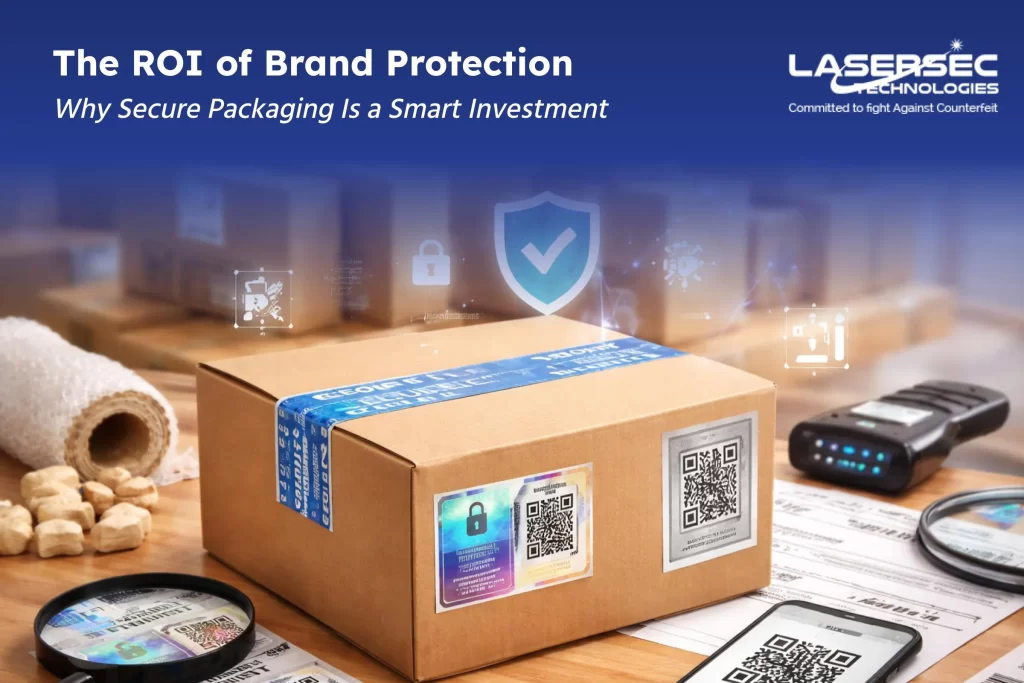
When implemented correctly, secure packaging delivers measurable returns by preventing revenue loss, protecting brand value, and strengthening supply chain control using solutions like security hologram stickers and Track & Trace systems.
The Hidden Financial Impact of Counterfeit Products
Counterfeiting has become a global challenge across industries including pharmaceuticals, electronics, FMCG, automotive spare parts, and apparel.
While counterfeit products may look similar to genuine ones, their impact on legitimate manufacturers can be significant.
Common consequences include:
Direct loss of product sales
Price erosion due to counterfeit competition
Distributor conflicts in affected markets
Increased warranty claims or complaints
Customer distrust toward the brand
In many cases, counterfeit products also damage the brand’s long-term reputation.
Consumers who unknowingly purchase counterfeit products often associate poor quality or safety concerns with the original brand. Even if the manufacturer is not responsible, the perception of the brand can suffer.
These indirect costs are often far greater than the initial revenue losses caused by counterfeit sales.
Why Counterfeiting Damages More Than Just Revenue
When counterfeit products enter the market, the impact extends beyond lost sales.
Counterfeiting can create several operational and strategic risks for manufacturers:
Regulatory complications if counterfeit products violate safety standards
Distributor relationship conflicts when unauthorized products appear in protected markets
Loss of market control due to parallel trade or diversion
Damage to brand credibility among customers and retailers
Increased investigation and enforcement costs
In industries such as pharmaceuticals or food products, counterfeit goods can also pose serious safety risks to consumers.
When customers lose confidence in a brand’s authenticity, rebuilding that trust can take years.
For this reason, the financial impact of counterfeiting should be evaluated not only in terms of lost units, but also in terms of long-term brand damage.
How Secure Packaging Protects Product Authenticity
Secure packaging introduces protective features that make it significantly more difficult for counterfeiters to replicate genuine products.
Instead of relying solely on standard labels or printed information, manufacturers can integrate anti-counterfeit packaging technologies directly into the product packaging.
Each of these elements strengthens the ability to verify whether a product is genuine.
When combined with authentication systems, packaging can provide unit-level product verification, allowing distributors, retailers, or consumers to confirm authenticity instantly.
The Business Value of Authentication and Verification Systems
Secure packaging becomes even more powerful when integrated with digital authentication platforms.
Authentication systems allow manufacturers to verify products through digital scanning technologies such as QR codes or serialization platforms.
This enables companies to:
Confirm whether a product is genuine
Detect duplicate or suspicious authentication attempts
Identify unauthorized product distribution
Track product movement across markets
Monitor potential counterfeiting activity
By transforming packaging into a verification tool, manufacturers gain better visibility across their supply chains using systems like Track & Trace technology.
This helps companies move from reacting to counterfeit incidents toward proactively preventing them.
Measuring the Return on Investment of Brand Protection
The return on investment (ROI) of brand protection comes from both prevented losses and long-term brand value protection.
Secure packaging investments help manufacturers recover value in several ways:
Revenue Protection
Prevents counterfeit products from capturing legitimate market share
Protects pricing integrity in key markets
Maintains revenue across authorized distribution networks
Brand Reputation Protection
Preserves customer trust in product authenticity
Prevents negative experiences caused by counterfeit products
Maintains brand credibility across markets
Operational Risk Reduction
Reduces supply chain disputes caused by diversion or parallel trade
Improves product traceability
Supports regulatory verification and inspections
When these factors are considered together, the financial value of brand protection often exceeds the cost of implementing secure packaging technologies.
Strengthening Supply Chain Control Through Secure Packaging
Manufacturers often lose visibility over products once they leave the production facility.
Secure packaging combined with authentication systems helps restore that visibility.
This level of transparency strengthens supply chain control and allows manufacturers to respond quickly when irregularities appear.
How We Support Brand Protection Through Secure Packaging
At Lasersec Technologies, we provide advanced anti-counterfeit packaging solutions designed to help manufacturers protect their brands and products across global markets.
Our solutions integrate security features directly into packaging using technologies such as:
These technologies help manufacturers create reliable authentication systems that protect products throughout the supply chain. To explore industry-specific applications, visit ourIndustry Solutions Gallery.
Why Brand Protection Is a Strategic Business Investment
Counterfeiting continues to grow across industries, creating serious risks for manufacturers and brand owners.
Treating brand protection as an optional expense can expose companies to significant financial and reputational damage.
Secure packaging solutions provide a proactive approach to preventing these risks.
By combining anti-counterfeit packaging technologies with authentication systems, manufacturers can protect product integrity, strengthen market trust, and maintain control across their distribution networks.
In the long term, investing in secure packaging is not simply a cost of packaging. It is a strategic investment in protecting brand value, customer trust, and sustainable business growth.
A pharmaceutical product leaves the manufacturing facility only after passing strict quality checks, regulatory approvals, and packaging inspections. Every batch is verified, sealed, and prepared for distribution through authorized supply chains.
But once the product enters the market, maintaining control becomes more challenging. Pharmaceutical companies must rely on distributors, pharmacies, and healthcare providers to ensure the medicine reaching patients is genuine.
In many markets, counterfeit medicines and unauthorized distribution make this difficult. Packaging may appear authentic, yet visual inspection alone cannot always confirm whether the product is legitimate.
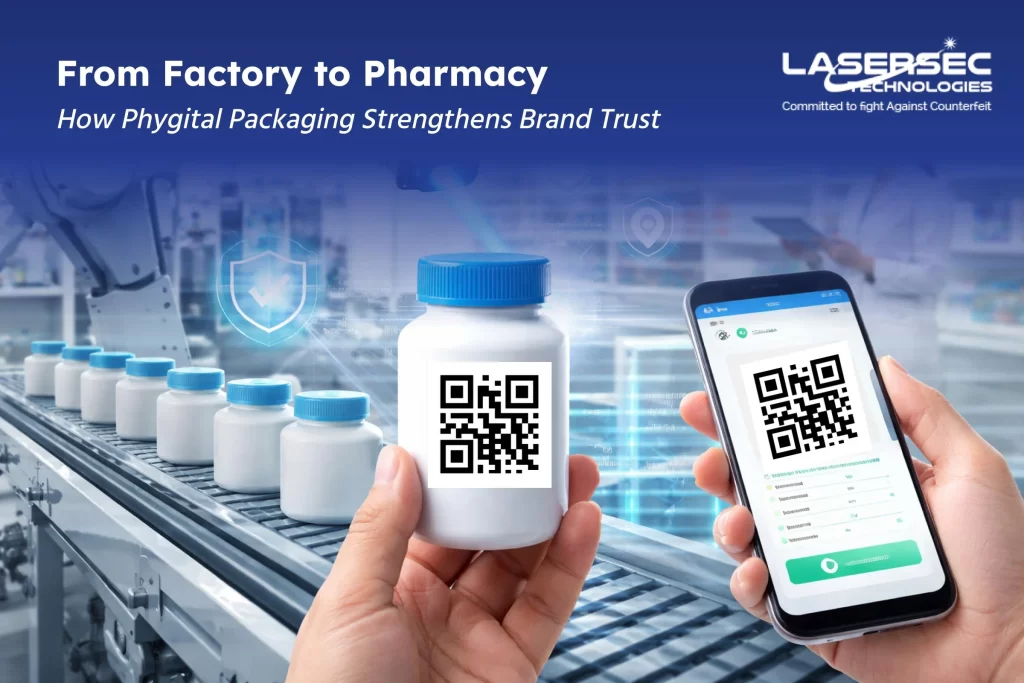
This is why pharmaceutical manufacturers are increasingly adopting phygital packaging solutions. By combining secure physical packaging features with digital verification technologies, phygital packaging enables products to be authenticated instantly through smartphone scanning.
This approach strengthens product security, improves transparency, and helps pharmaceutical companies maintain trust from the factory to the pharmacy.
The Growing Risk of Counterfeit Medicines in Pharmaceutical Supply Chains
Pharmaceutical supply chains often involve multiple intermediaries before a product reaches the patient.
These may include:
Manufacturers
Exporters
Distributors
Wholesalers
Pharmacies
Each stage introduces potential risks related to counterfeiting or unauthorized product diversion.
Unauthorized resale through unapproved distributors
Product diversion into unintended markets
Repackaging or relabeling of pharmaceutical products
Difficulty verifying authenticity at the pharmacy level
These risks create serious consequences for pharmaceutical companies.
They can result in:
Patient safety concerns
Regulatory compliance challenges
Distributor conflicts
Brand reputation damage
Financial losses from counterfeit circulation
Without reliable authentication systems, confirming product authenticity becomes extremely difficult once medicines leave the manufacturing facility.
Why Traditional Pharmaceutical Packaging Security Is No Longer Enough
Traditional pharmaceutical packaging includes elements such as printed labels, barcodes, batch numbers, and expiry information. These features help identify products and support logistics, but they were not designed to prevent modern counterfeiting.
Today, counterfeiters can replicate packaging designs with increasing accuracy. Even simple security labels can sometimes be visually imitated if they are not supported by authentication systems.
Traditional packaging elements can often be:
Copied or reproduced
Reprinted on counterfeit products
Removed and applied to fake packaging
Visually replicated using advanced printing technologies
Even standard holographic labels without authentication layers may not provide sufficient protection against modern counterfeiting.
Because of this, appearance alone cannot reliably confirm authenticity.
This is why pharmaceutical companies are moving toward multi-layered packaging security systems that combine physical anti-counterfeit features with digital verification.
What Is Phygital Packaging in the Pharmaceutical Industry
Phygital packaging integrates physical packaging security with digital authentication systems to create a stronger protection mechanism.
Instead of relying only on visual security features, phygital packaging adds a digital verification layer directly to the product packaging.
Each product unit receives a unique digital identity linked to secure manufacturing and distribution data.
When the code is scanned, the authentication system can instantly verify:
Whether the product is genuine
Where the product was manufactured
The production batch details
The intended distribution market
This transforms pharmaceutical packaging into a secure authentication point for verifying product legitimacy.
How Phygital Packaging Enables Patient-Level Product Verification
One of the most valuable advantages of phygital packaging is that it allows verification directly at the pharmacy or patient level.
When a medicine package includes a secure hologram integrated with a QR code authentication or authentication marker, users can verify the product by scanning the code with a smartphone.
The system checks the unique identifier against secure product records and confirms authenticity instantly.
If suspicious activity occurs, such as duplicate scans or verification from unexpected regions, the system can immediately flag potential counterfeit or diversion risks.
This enables:
Pharmacists to verify medicines before dispensing
Patients to confirm product authenticity
Regulators to investigate suspicious products
Pharmaceutical companies to monitor verification activity
By enabling verification at the point of use, phygital packaging significantly reduces the chances of counterfeit medicines reaching patients.
Supporting Pharmaceutical Compliance and Regulatory Requirements
Pharmaceutical regulations around the world are increasingly focused on improving traceability and product authentication.
Many markets now require manufacturers to implement systems that support:
Product serialization
Track and Trace capability
Supply chain transparency
Authentication verification
Phygital packaging helps meet these expectations by integrating physical anti-counterfeit packaging with digital authentication systems such as Track & Trace solutions.
These systems enable regulators and supply chain partners to verify:
Product origin
Manufacturing authenticity
Batch integrity
Distribution pathways
Authentication capabilities also improve inspection efficiency by providing instant verification during regulatory checks.
For pharmaceutical companies operating across global markets, this transparency strengthens compliance and improves regulatory confidence.
Protecting Pharmaceutical Brand Trust Through Secure Packaging
Trust plays a critical role in the pharmaceutical industry. Patients, healthcare professionals, and regulators must have confidence that medicines are safe and genuine.
When counterfeit medicines appear in the market, they can quickly damage both patient safety and brand credibility.
Secure holographic packaging such as security holograms combined with digital verification allows genuine products to be distinguished quickly from counterfeit copies.
This capability helps:
Prevent counterfeit medicines from circulating undetected
Strengthen trust among healthcare professionals
Protect pharmaceutical brand reputation
Ensure patients receive genuine medicines
Over time, authentication systems reinforce long-term trust in pharmaceutical products.
Improving Pharmaceutical Supply Chain Visibility with Phygital Authentication
Pharmaceutical manufacturers often have limited visibility once products leave the factory.
Phygital authentication systems improve supply chain transparency by generating verification records whenever products are scanned using Track & Trace technology.
These records allow pharmaceutical companies to:
Monitor product movement across regions
Detect unauthorized distribution channels
Identify suspicious verification patterns
Investigate potential counterfeit activity
Improve supply chain oversight
This visibility allows companies to identify risks earlier and respond quickly before counterfeit products spread widely in the market.
Phygital authentication shifts supply chain protection from reactive response to proactive prevention.
How We Support Secure Phygital Packaging for Pharmaceutical Brands
At Lasersec Technologies, we provide advanced anti-counterfeit packaging solutions designed for pharmaceutical manufacturers operating in complex global markets.
Our phygital packaging solutions combine secure physical packaging with digital authentication technologies, including:
By integrating these technologies directly into pharmaceutical packaging, we help manufacturers create reliable product authentication systems that work across the entire supply chain.
Strengthening Pharmaceutical Trust from Factory to Pharmacy
Pharmaceutical supply chains continue to grow more complex, and the risks associated with counterfeit medicines remain significant.
Phygital packaging offers a powerful solution by combining secure holographic packaging with digital authentication technologies. This approach enables instant product verification, improves supply chain transparency, and strengthens compliance with evolving regulations.
Most importantly, it helps ensure that genuine medicines reach pharmacies and patients safely.In today’s pharmaceutical industry, phygital packaging is not just a packaging innovation. It has become an essential strategy for protecting patient safety, brand integrity, and long-term trust in pharmaceutical products.
A shipment leaves your facility after months of production planning, quality checks, and export compliance preparation. Every detail has been verified. The product meets international food safety standards, documentation is complete, and authorized distributors are ready.
But weeks later, an unexpected issue arises.
Your distributor reports seeing your product in a country where it was never authorized to be sold. In another instance, customs officials question the authenticity of a shipment carrying your brand name. The packaging appears genuine, but verification is unclear.
This is the growing reality of counterfeit food products, parallel imports, and unauthorized distribution. These risks do more than disrupt a single shipment. They affect regulatory compliance, distributor trust, pricing integrity, and long-term brand reputation.
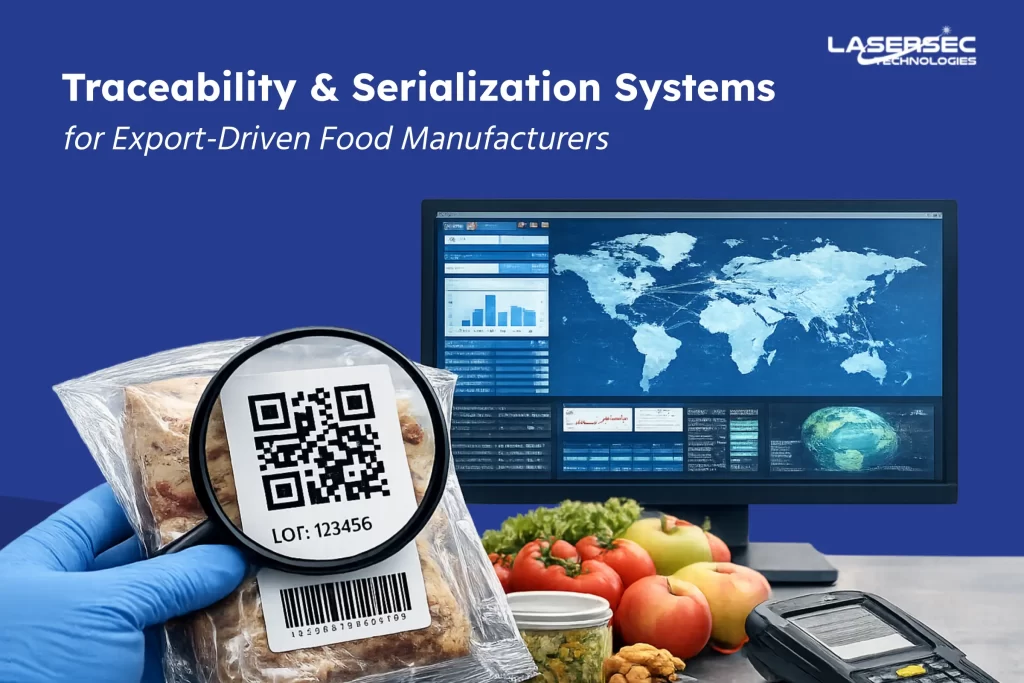
This is why food authentication solutions have become essential for exporters. Authentication transforms packaging into a secure, verifiable identity system that protects products across global supply chains using technologies like QR code authentication and Track & Trace systems.
Understanding the Rising Risk of Fake Imports and Parallel Trade in Food Exports
As food products move through international supply chains, they pass through multiple intermediaries, distributors, logistics providers, and retailers. This complexity creates opportunities for unauthorized activities such as:
Parallel imports into unauthorized countries
Relabeling products for resale in different markets
These activities are increasing globally due to sophisticated packaging replication techniques and fragmented supply chain visibility.
For food exporters, the consequences are significant:
Loss of brand control
Regulatory compliance risks
Distributor conflicts
Consumer safety concerns
Financial and reputational damage
Without a reliable product authentication system, it becomes extremely difficult to verify whether a product is genuine, where it originated, and how it entered a specific market.
Why Traditional Packaging and Labels Cannot Prevent Counterfeit Food Products
Traditional packaging elements such as printed labels, barcodes, and batch numbers were designed for identification and logistics—not for security and authentication.
These elements can be easily:
Copied
Reprinted
Duplicated
Reapplied to counterfeit products
Even standard holographic labels without secure authentication layers can be visually imitated if not integrated with verification technologies.
Counterfeiters can replicate packaging visually, making manual inspection unreliable.
Regulators, distributors, and retailers cannot confirm authenticity based on appearance alone. This creates delays, uncertainty, and compliance risks during export inspections and market verification.
Modern global food exports require secure authentication systems that provide instant, verifiable proof of product authenticity through solutions such as tamper-evident labels and QR code anti-counterfeit labels.
What Is Food Authentication and How Food Authentication Systems Work
Food authentication is a secure process that assigns a unique, traceable identity to each product unit. This identity is integrated directly into packaging using secure authentication technologies such as:
Each authentication code is unique and linked to secure product data, including:
Manufacturing origin
Production batch information
Export destination
Product identity and verification status
When the authentication code is scanned, the system instantly verifies whether the product is genuine through secure platforms such as Track & Trace authentication systems.
If duplicate codes appear, or if products are detected in unauthorized markets, the system immediately identifies potential counterfeit or parallel trade activity.
This transforms packaging into an active brand protection and verification tool.
How Food Authentication Prevents Parallel Imports and Unauthorized Distribution
Parallel trade occurs when genuine products are diverted from authorized supply chains and resold in unauthorized markets. This disrupts pricing structures, violates distribution agreements, and creates regulatory complications.
Food authentication solutions prevent parallel imports by enabling unit-level verification using secure packaging such as QR code holograms and anti-counterfeit labels.
Each product unit can be verified to confirm:
Whether it was intended for a specific export market
Whether it has been duplicated or counterfeited
Whether it has been diverted to an unauthorized region
Whether the product identity matches manufacturing records
For example, if a product intended for export to one country is scanned in a different region, authentication systems immediately detect the discrepancy.
This allows exporters and brand owners to identify unauthorized distribution channels and take corrective action quickly.
Authentication restores control over products even after they leave the manufacturing facility.
Supporting Export Compliance and Regulatory Requirements with Authentication
Food exporters must comply with strict international regulations related to product origin, safety, traceability, and authenticity.
Regulatory authorities increasingly expect manufacturers to demonstrate supply chain transparency and authentication capability through secure systems such as Track & Trace solutions.
Food authentication systems support compliance by enabling regulators to verify:
Product origin
Manufacturing authenticity
Batch integrity
Export destination verification
Authentication provides instant, verifiable proof that the product is genuine and compliant.
This reduces customs delays, improves inspection efficiency, and strengthens regulatory confidence.
It also demonstrates that exporters are implementing proactive brand protection and compliance measures.
How Food Authentication Protects Brand Reputation and Consumer Trust
Brand reputation is one of the most valuable assets for food exporters. However, counterfeit or diverted products can quickly damage consumer confidence—even when the manufacturer is not responsible.
Consumers cannot distinguish between genuine and counterfeit products if packaging appears identical without secure authentication features like security holograms or tamper-evident packaging labels.
Authentication enables distributors, retailers, and consumers to verify product authenticity instantly.
This prevents counterfeit products from circulating undetected and ensures consumers receive genuine, safe products.
Over time, authentication strengthens brand credibility and builds long-term trust across global markets.
Improving Food Supply Chain Visibility with Product Authentication Systems
One of the biggest challenges exporters face is limited visibility after products leave the manufacturing facility.
Food authentication systems improve supply chain transparency by creating verification records whenever a product is scanned through systems such as Track & Trace technology.
This enables exporters to:
Monitor product movement across markets
Detect unauthorized distribution
Identify suspicious activity
Prevent counterfeit infiltration
Improve supply chain control
This visibility allows faster response to potential risks and prevents widespread distribution of counterfeit or diverted products.
Authentication shifts supply chain management from reactive damage control to proactive prevention.
Why Food Authentication Solutions Are Essential for Modern Food Exporters
Global food trade continues to expand, but so do risks related to counterfeit imports, parallel trade, and unauthorized resale.
Authentication provides critical protection by enabling:
Authentication transforms packaging into a secure, verifiable proof of authenticity.
It protects exporters, distributors, regulators, and consumers alike.
How We Supports Secure Food Authentication and Brand Protection
At Lasersec Technologies, we provide advanced food authentication and anti-counterfeit packaging solutions designed to protect exporters operating in global markets.
By combining secure physical packaging with authentication technologies, we help brands maintain control, transparency, and trust throughout the product lifecycle.
Strengthening Global Food Export Security Through Authentication
As counterfeit food products and parallel trade continue to rise, authentication has become a critical component of export security and brand protection.
Food authentication systems provide verifiable product identity, improve supply chain transparency, and support regulatory compliance through technologies like secure holographic labels and Track & Trace authentication.
They help ensure that genuine products reach authorized markets safely and securely.
Most importantly, authentication protects brand reputation, consumer safety, and long-term export success.
In today’s global food industry, authentication is no longer optional. It is an essential foundation for secure, compliant, and trusted international food distribution.