





Lasersec Technologies

Counter the Counterfeit Goods in Supply Chain

With the advent of e-commerce and the global rise in online shopping the penetration of counterfeit goods has increased in the supply chain deriding the original companies.

The reason behind counterfeit goods reaching the consumers so easily is the fact that now the orders are being placed online and these goods can be easily shipped through unauthorized agents.

This is because every supplier is currently working with a group of sub-suppliers who in turn sourced from local suppliers.

 When the suppliers are many and unauthorized, they can easily channel counterfeit goods through fake labeling of products, using unregulated inferior materials to manufacture those products, and using or copying other trademarks inappropriately.

Furthermore, in developing countries where the entire trade activity is still unorganized, and consumers have less purchasing power the counterfeit goods often become a favorite choice as they want the branded apparels/gadgets at a lesser price and are ready to compromise on the quality, right?

 Counterfeit Goods can essentially do the following damage
If the product is of industrial significance or related to automobile, then these parts jeopardize the safety of consumers and also give poor performance. Since the counterfeit goods often do not come under the tax bracket, the economy loses potential revenue.

There are real instances wherein extreme losses have occurred only because of the use of counterfeit goods. For example, the Patnair Flight 384 witnessed a significant crash leading to 30+ deaths because the tail section had failed to owe to fake parts being bolted up which could not bear the air pressure.

Similarly, a high profile investigation in the US Army revealed that there were more than 1700 cases of counterfeit goods involving a million fake parts being used by the American military.

 How can you counter Fake Goods?
On one hand where technology has flourished e-commerce and led to the counterfeit goods penetration in the supply chain whereas, on the other hand, it has also enabled companies to take strict security measures to ensure the authenticity of their goods and services.

There is software which may help you to track the entire movements of your goods throughout the supply chainYou may also use barcodes and unique serial numbers to validate the authenticity. You can also use various anti-counterfeit tools such as the Quantum Dots, DNA signature, Shape memory polymers, and Anti-erasing ink to ensure authenticity.
Share :

Related Blogs

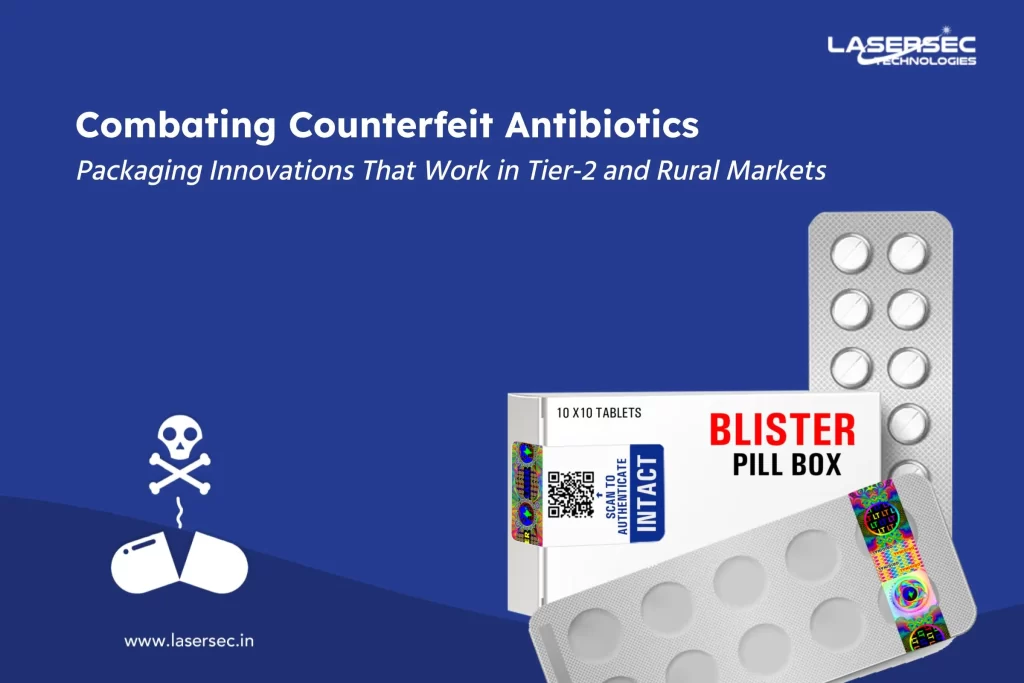
Combating Counterfeit Antibiotics-Packaging Innovations That Work in Tier-2 and Rural Markets

Imagine a patient in a small town buying antibiotics with hope for recovery, only to later discover the medicine was fake. This isn’t just a business challenge; it’s a human crisis that threatens lives and erodes trust in healthcare.

According to the World Health Organization (WHO), about 1 in 10 medical products in low- and middle-income countries is substandard or falsified, with antibiotics among the most commonly counterfeited. In India, this issue is especially severe in tier-2 and rural markets, where patients depend heavily on affordable medicines but have fewer tools to verify authenticity.

For domestic pharma companies with mass-market distribution, protecting these communities goes beyond compliance — it’s about safeguarding public health and protecting brand trust in the very markets where demand is highest.

Why Rural and Tier-2 Markets Face Bigger Risks

Medicines in rural areas often pass through long, complex distribution chains before reaching patients. With fewer regulatory checks, limited pharmacist training, and high demand for low-cost antibiotics, counterfeiters exploit every gap.

Why antibiotics?

  • They are the most prescribed medicines in rural India.
  • Counterfeit versions are easy to circulate undetected.
  • Fake or substandard antibiotics fuel antimicrobial resistance (AMR), making genuine treatments less effective.
The result: 
patients don’t recover, resistance spreads, and pharma brands lose credibility.

Practical Packaging Solutions That Work on the Ground

Domestic pharma leaders don’t need futuristic tech — simple, field-proven solutions can protect both patients and business in high-risk markets:

1. QR Codes for Instant Verification

With smartphone use now above 50% in tier-2 and rural India, secure QR codes allow patients and chemists to scan and confirm authenticity in seconds.

2. Scratch-to-Reveal Codes

A cost-effective feature where patients scratch a panel to uncover a one-time code, then send it via SMS for instant confirmation. Perfect for regions with poor internet but reliable mobile coverage.

3. Toll-Free Number Verification

For areas where smartphones are less common, patients can call a toll-free number, enter the pack code, and receive immediate confirmation.

4. Serialization & Track-and-Trace

For companies looking at scale, serialization (unique pack codes) with Track-and-Trace systems enables full supply chain visibility. While CDSCO already mandates serialization for exports, extending it domestically creates a powerful barrier against counterfeits.

Even the best packaging features work only if people know how to use them. Pharma companies can build trust by:

  • Printing clear calls-to-action on packs like “Scan to Verify” or “Scratch and SMS to Confirm.”
  • Training distributors, chemists, and field staff to explain features.
  • Partnering with health workers and pharmacist associations to promote safe buying practices.

What Pharma Companies Can Do Today

  • Adopt at least one low-cost anti-counterfeit feature suited to your market.
  • Train distributors and field teams to guide chemists on how to use these features.
  • Print simple instructions on every pack to drive patient adoption.
  • Monitor ground feedback and refine your packaging strategy over time.

Beyond Packaging: Partnerships Multiply Impact

Technology works best when paired with collaboration.

Pharma companies can:

  • Partner with local health workers to raise awareness.
  • Work with pharmacist associations to block counterfeit circulation.
  • Align with regulators like CDSCO — and globally with bodies like TGA and USFDA — to meet compliance while building consumer confidence.

Why Acting Now Matters

Counterfeiting in non-urban supply chains is no longer just a rural problem — it’s a nationwide risk. Ignoring it can result in regulatory challenges, lost market share, and, most importantly, lives lost.

By contrast, acting now with practical anti-counterfeit packaging creates an opportunity to:

  • Protect patients where they are most vulnerable.
  • Safeguard your brand in India’s fastest-growing pharma markets.
  • Position your company as a trusted healthcare partner at home and globally.
Because at the end of the day, packaging isn’t just about protecting a product — it’s about protecting people.

Moving Forward with Safer Packaging

At Lasersec Technologies, we help pharma companies design practical anti-counterfeit packaging solutions — from scratch panels and QR codes to serialization and Track & Trace.

Backed by compliance expertise and real-world field success, our goal is simple: to help you protect patients, build trust, and stay ahead of counterfeiters in both rural India and global markets.

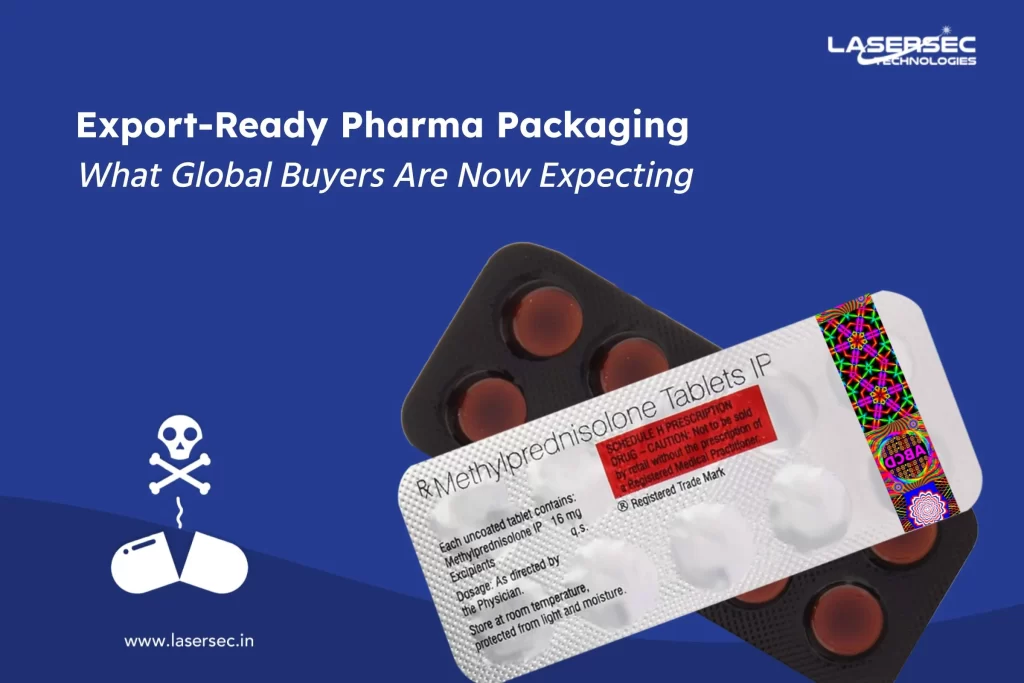
Export-Ready Pharma Packaging- What Global Buyers Are Now Expecting

You’ve secured the order, production is complete, and your shipment is ready to move. But then, just before dispatch, your buyer asks:

“Does your packaging meet serialization and scan-based proof requirements?”

Imagine losing a million-dollar contract — not because of your medicine, but because your packaging failed to inspire trust. This is the reality many exporters face today. For global buyers, packaging has become the deciding factor between smooth delivery and a deal falling apart.

Why Packaging Standards Are Now Non-Negotiable

Global buyers are under pressure from regulators, distributors, and patients. They must ensure every product they source is traceable, authentic, and tamper-proof. That means export-ready packaging is no longer optional — it’s the foundation of international trade.

Key compliance must-haves include:

  • Track & Trace Systems – complete product visibility across the supply chain
  • Serialization – unique identifiers that meet global compliance norms
  • Tamper-Evident Features – seals or packaging that immediately reveal interference
  • Scan-Based Proof – QR codes or secure markings enabling instant authentication

Without these, buyers see risk — and in today’s market, risk means rejection. It’s not just about checking compliance boxes. Buyers want reassurance that:

  • Their shipments won’t face customs delays due to packaging gaps
  • They won’t be caught in regulatory disputes in importing countries
  • They can confidently show stakeholders a secure supply chain
For exporters, this transforms packaging into a proof of credibility. It’s no longer just a container — it’s part of your business reputation.

Regional Buyer Expectations: One Size Doesn’t Fit All

Every region enforces its own regulations. Understanding them isn’t just smart — it’s survival.

RegionKey Packaging ExpectationsWhat It Means for Exporters
European Union (EU)Strict serialization under the FMD (Falsified Medicines Directive) with database-driven verification.Packs must be registered and verifiable via EU hub. Non-compliant shipments are rejected at borders.
United StatesDSCSA (Drug Supply Chain Security Act) requires interoperability and traceability beyond serialization.Exporters must ensure their systems “talk” with US buyers’ systems for seamless data exchange.
Middle East & AfricaHigh counterfeit risks demand visible tamper-evidence + secure scan codes.Buyers expect seals and markings they can verify instantly at distributor level.

According to the WHO, 1 in 10 medical products in low- and middle-income countries is substandard or falsified — highlighting why MEA and APAC buyers demand extra layers of security.

Before shipping, ask yourself:

  • Does every pack carry a unique, scannable serialization code?
  • Is there a tamper-evident seal that cannot be replaced unnoticed?
  • Can my systems generate and share serialization data with buyers?
  • Do I have scan-based proof of authenticity ready for customs or audits?

If the answer is “no” to any of these, your packaging isn’t truly export-ready.

Indian pharma is globally respected for high-quality medicines. But as regulations tighten, packaging standards are becoming the new benchmark for trust.

Those who adapt quickly — with serialization, secure QR codes, and tamper-evident solutions — will stand out as reliable partners. On the other hand, exporters who delay risk losing contracts, not because of product quality, but because their packaging didn’t pass the credibility test.

Global buyers are no longer asking if your packaging is compliant — they’re asking how quickly you can prove it.

Export-ready packaging is now a business advantage, not just a compliance step. For exporters preparing to expand globally, investing in the right packaging solutions is no longer optional.

Because in today’s market, packaging isn’t just protecting your product — it’s protecting your growth.

At Lasersec Technologies, we partner with pharma exporters to ensure their packaging meets global serialization, traceability, and anti-counterfeit standards — helping you ship with confidence and win global trust.